
Lost in time and in translation:
a Danish experience
Guds fred (Old Danish for “God’s peace”), or if you prefer:
Godspeed (🇬🇧); Grüß Gott (🇩🇪); il Signore ti dia pace (🇮🇹).

My name is Vittoria, 25-year-old Italian girl, with a passion for — and a Master’s degree in — linguistics, Germanic philology and literary translation.
Despite my interest in old languages and medieval manuscripts, I’m really into Gender-, Queer- and Disability- Studies, taking everyday an active part in fighting against sexism, racism, ableism, ageism, fatphobia and discrimination against the LGBTQIA+ community.
I applied for the European Solidarity Corps intercultural exchange program at the Middelaldercentret (Medieval Centre) in the Danish town of Nykøbing Falster because I wanted to experience the innovative approach of experimental archaeology, learn a new Germanic language and have an inspiring adventure abroad.
Never would I have imagined to find such welcoming people and environment, even outside the museum walls, starting with my ESC French fellows, Elfie and Corentin, and the students at CELF school campus I was living in: I couldn’t be hosted by a Danish family because of COVID-19, but I was never alone facing the hardships I encountered, for they were my family! They were always there when I needed a sympathetic ear and support me, always there to celebrate my achievements, always there when I was cooking pasta alla carbonara… 😂
I feel so happy and grateful for the kind and helpful people I met during this five-months life-changing experience.
With the always-available and friendly support of AFS Interkultur (the association that received us here and helped us with our settlement in this cold, wet, flat but nevertheless welcoming land of Denmark) Elfie, Corentin and I set sail for this wonderful journey together.
𝔐𝔦𝔡𝔡𝔢𝔩𝔞𝔩𝔡𝔢𝔯𝔠𝔢𝔫𝔱𝔯𝔢𝔱
The Middelaldercentret (Medieval Centre) is a medieval living-history museum in Nykøbing Falster, 2 hours by train southward from Copenhagen.
It consists of 4 main areas:
- the medieval town of Sundkøbing, set in 1411 — with lots of furnished houses and workshops;
- the medieval technology park — with replicas of Renaissance tools, weapons and other artefacts;
- the Victorian steampunk park of Griffenholm — with 5 buildings in late-1800s/early-1900s-style where escape rooms and educational events take place;
- the magic forest — where fantastic creatures from the Scandinavian folklore live and hide in the shadows.
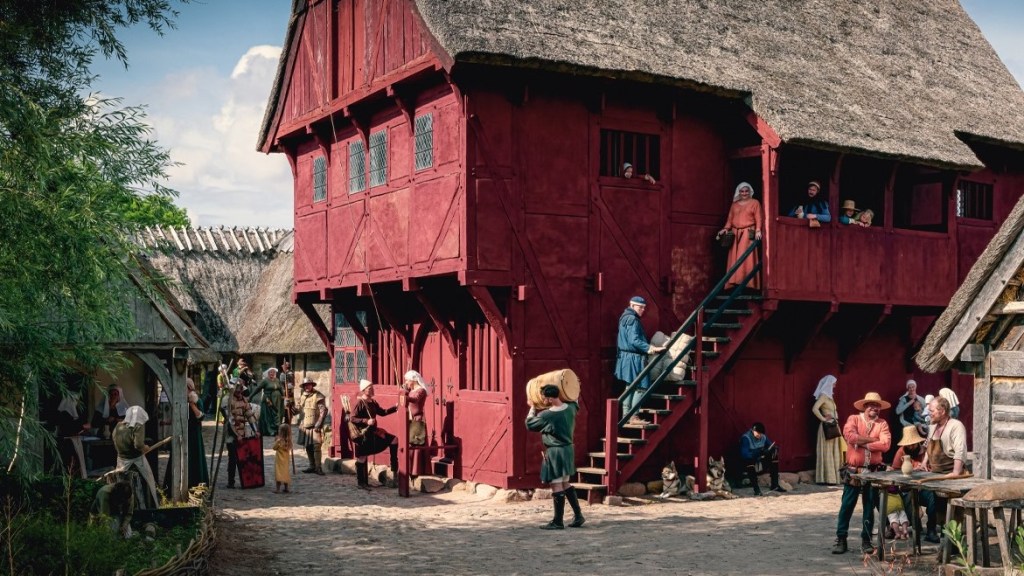
What is it like to live and work in the Middle Ages?
To be honest — it’s hard, especially when it’s raining and everything gets wet and muddy, but it’s fun, challenging, engaging and exciting. It really makes you think of how grateful we should be and how lucky we are in 2021 with all our amenities: running water, heaters… bathrooms!
It really made me understand how we take things — even the smallest and silliest ones — for so granted in our lives: starting a fire in the medieval way could take hours, while nowadays we have fire in half a second with a lighter!
At the Medieval Centre my main job was preparing meals by following medieval recipes in the kitchen of the merchant’s house, helping my beloved mentor Lotte.
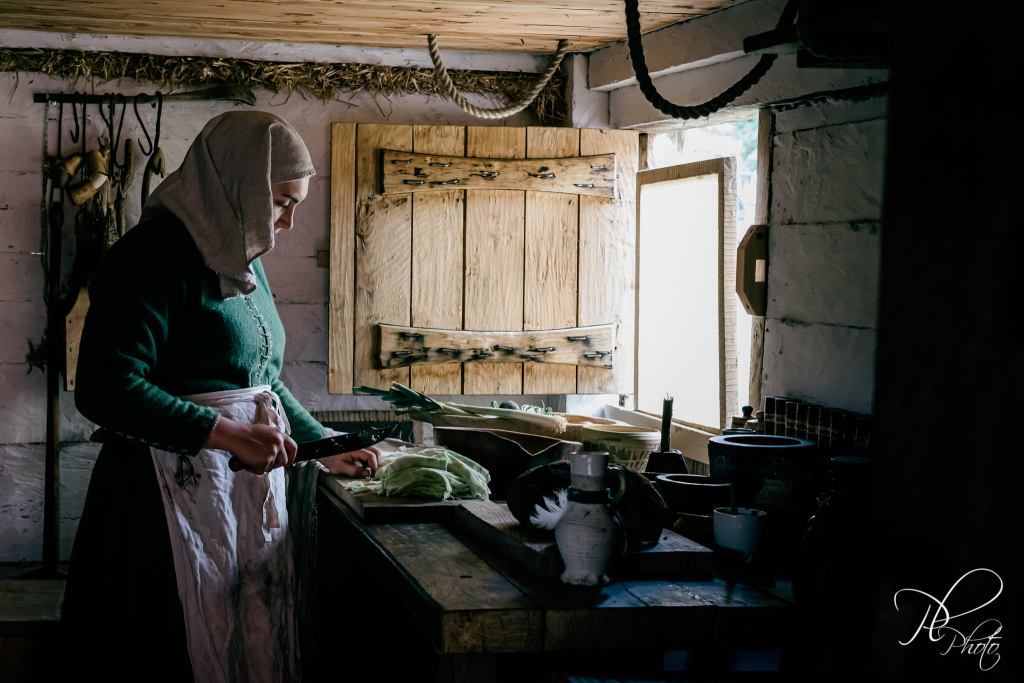
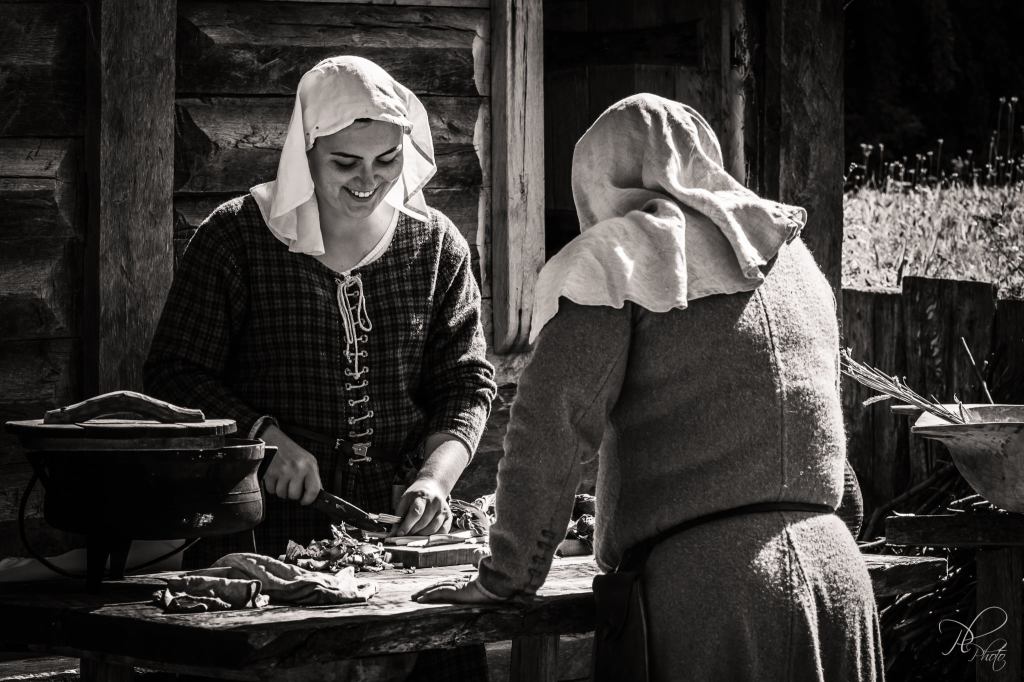
Elfie, Corentin and I contributed as mediators, opening the medieval houses (in which people can actually sleep!) in the morning, developing our own creative handcrafts projects and taking an active part in the historical interpretation by carrying out these jobs:
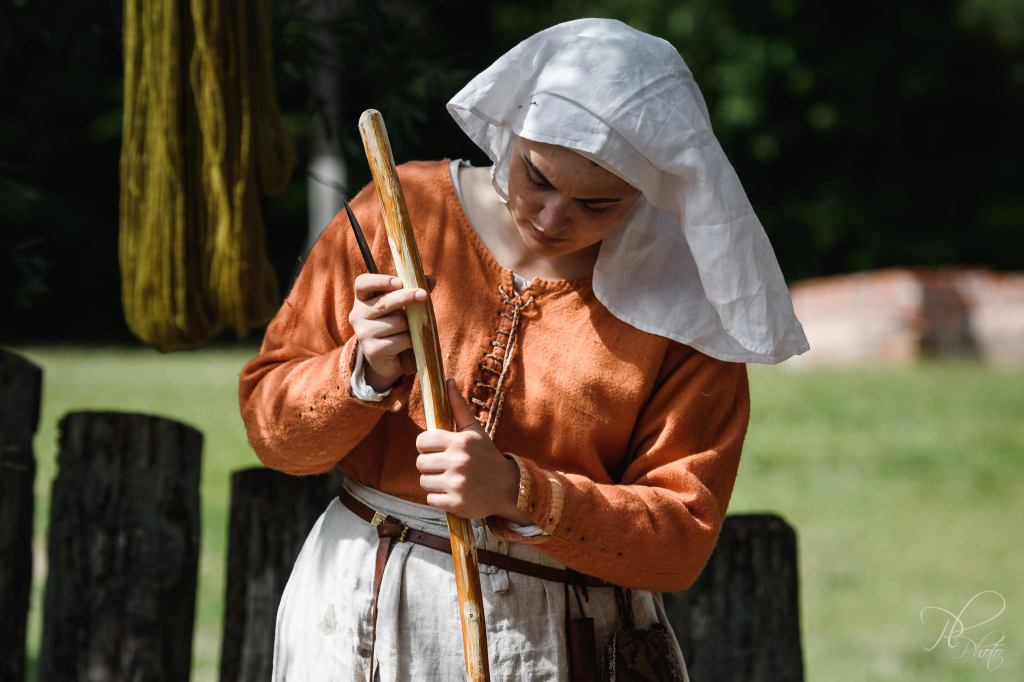
- carpentry — for making spoons, bowls, brooms;
- making ropes;
- blacksmithing;
- working with tin;
- making gesso and painting with the Artists’ Guild;
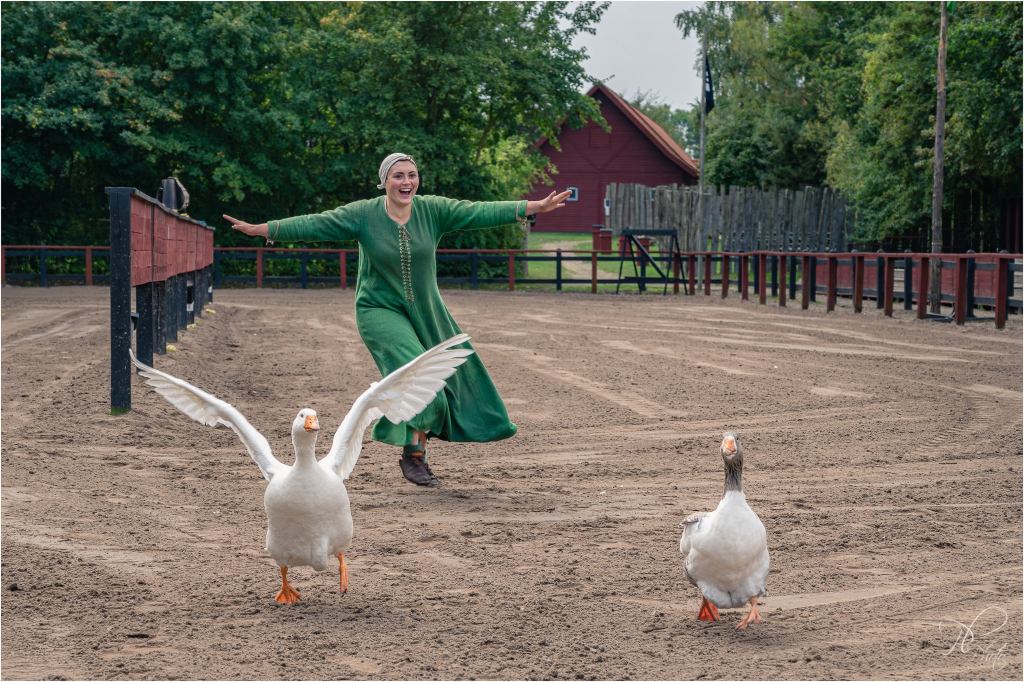
- setting up the horses and the arena for the knights tournament (yes, sometimes we had very unexpected pitch invasion 🦆) and actively helping at the centre court;
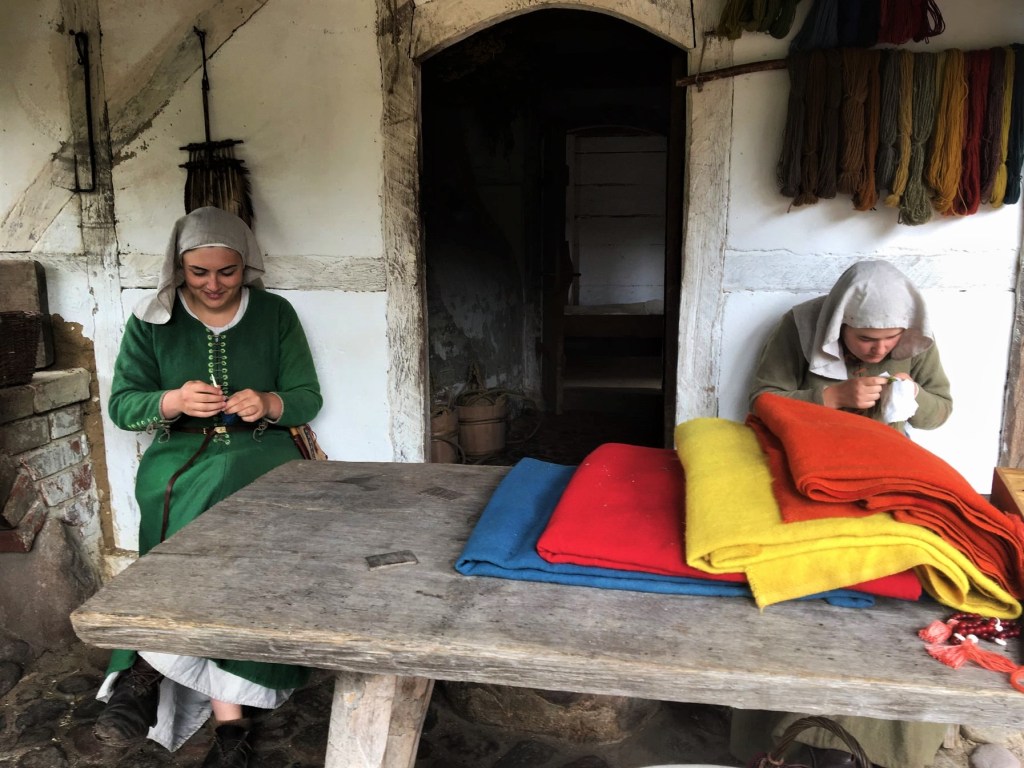
- nålebinding (needle-binding) — for making woolen socks;
- spinning the wool;
- setting a medieval loom;
- dying fabrics;
- embroidering;
- making straw baskets;
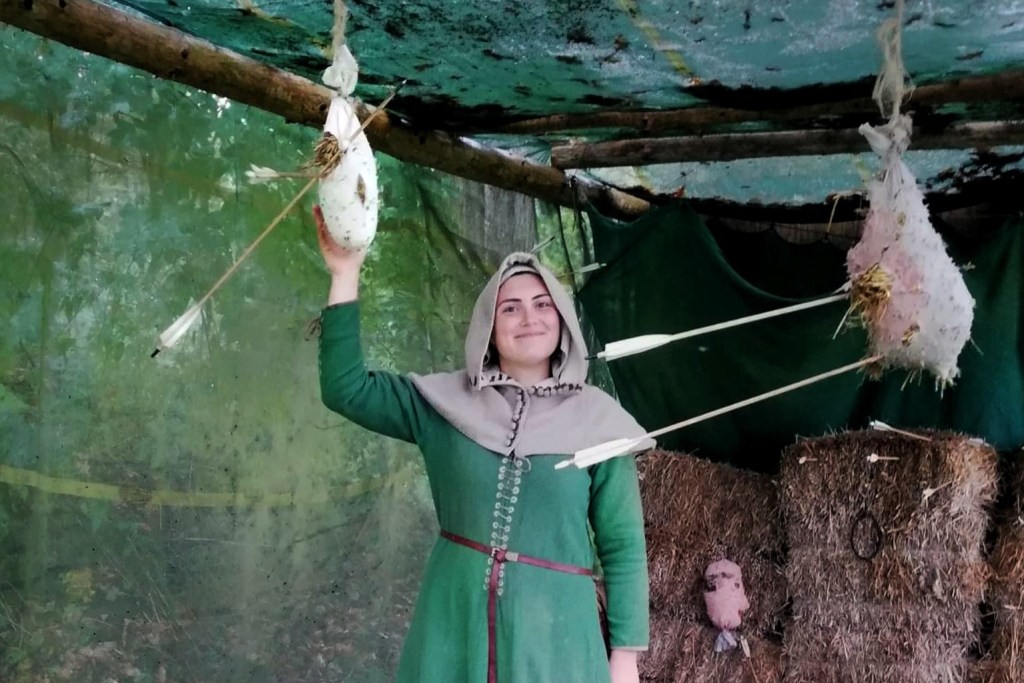
- archery with longbow;

- sewing leather — for making shoes, purses and cases;

- and last, but not the least, firing with the trebuchet (and cannons, too!)
The Medieval Centre is an intercultural, stimulating and proactive environment where we learn every day how to craft things the way our ancestors did and recreate the atmosphere that may have reigned at that time.
𝔾𝕣𝕚𝕗𝕗𝕖𝕟𝕙𝕠𝕝𝕞
When in October the medieval town was closed to visitors for getting ready for the big event in week 42 (18th-22nd October), we switched our medieval clothes to Victorian steampunk uniforms to join professor Griffenholm and his assistants in helping school children and teenagers to discover more about supernatural and mythical creatures from the Danish and Norse folktales.

While working there, we focused on our common solidarity project: translating into French (for Elfie and Corentin) and Italian (for me) the signs in the magic forest, by then only available in English and German. We also translated a written introduction about the tournament, since we noticed that many visitors from abroad didn’t understand what was going on during the joust, for the mediator was explaining only in Danish (due to timing reasons) the challenges that the knights have to accomplish.
By providing fine translations in two of the main European Union official languages, we would have helped not only visitors from other countries to better understand the description of the whimsical beasts and other essential information, but also improved the museum offer.
Examples of Italian translation (see all translation at page 2):
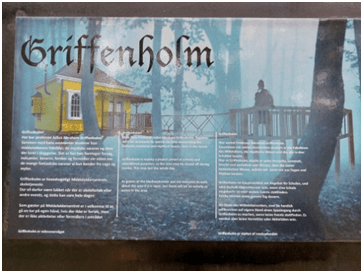
GRIFFENHOLM
Qui vive il professor Julius Abraham Griffenholm che, insieme ai suoi assistenti, porta avanti ricerche su leggendarie bestie medievali, creature mistiche e tutto ciò che si annida nell’ombra. A Griffenholm l’omonimo professore svolge il suo lavoro di raccolta, preservazione, ricerca e trasmissione delle informazioni riguardo questi esseri fantastici di cui altrimenti avremmo conoscenza solo attraverso miti e leggende.
L’area di Griffenholm è principalmente indirizzata a progetti scolastici e educativi, perciò in presenza di scuole o eventi potrebbe essere chiusa al pubblico per tutta la giornata. L’accesso è consentito agli ospiti del Centro Medievale esclusivamente quando l’area è aperta sebbene non saranno presenti attività o figuranti.
Area videosorvegliata. Griffenholm è sovvenzionato da Nordea-fonden.
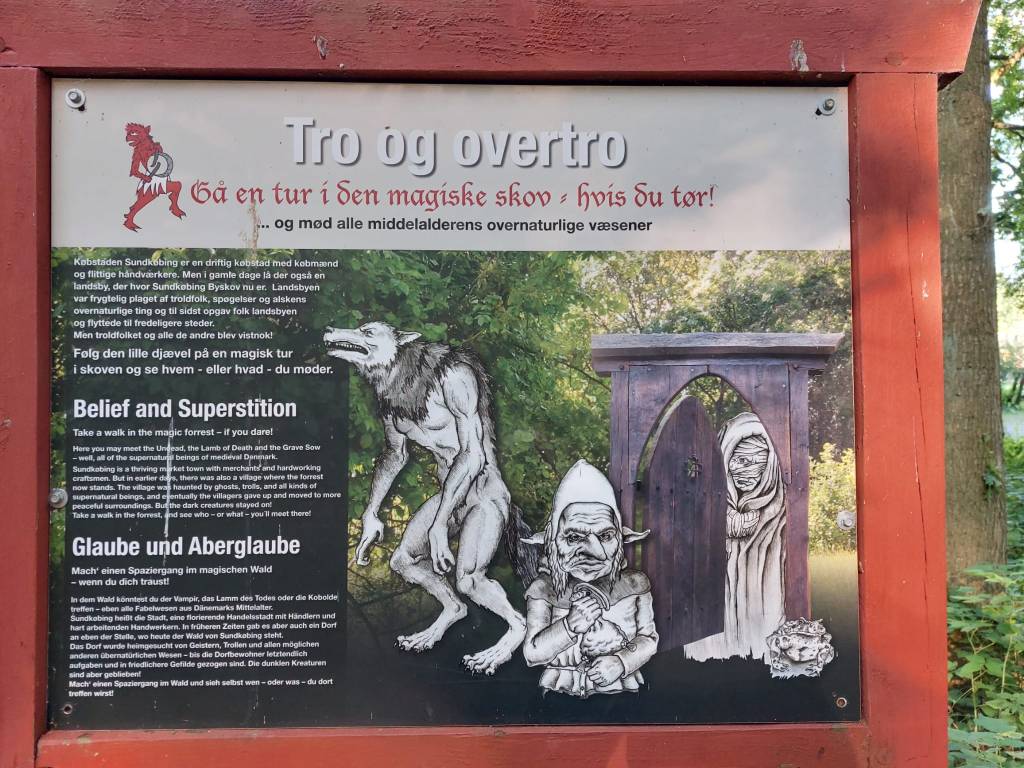
Fede e superstizione
Addentratevi nella foresta incantata… se ne avete il coraggio!
Qui potreste incontrare morto viventi, draghi, elfi e tutte le creature soprannaturali della Danimarca medievale.
Sundkøbing è una fiorente città mercantile, abitata da commercianti e laboriosi artigiani. Ma in altri tempi, dove ora c’è la foresta, qui si trovava un villaggio. Questo, però, era infestato da fantasmi, troll e ogni genere di creatura soprannaturale, così alla fine gli abitanti del villaggio si arresero e si spostarono altrove, in cerca di un posto più pacifico… Ma le creature oscure abitano ancora questi luoghi! Addentratevi nella foresta e fate attenzione a chi – o cosa – incontrerete!

GLI ELFI
Gli elfi, o huldre, sono creature affascinanti e seducenti (nonostante le femmine siano provviste di coda di mucca o volpe) e si dice abbiano le schiene cave, il che li rende invisibili visti da dietro. Possono assumere l’aspetto di qualunque persona o cosa. Amano molto curiosare nel nostro mondo, infatti, quando succede qualcosa di interessante, spesso i primi ad accorrere sul posto sono proprio elfi con sembianze umane. Di tanto in tanto qualche donna sparisce dal villaggio, rapita dagli elfi affinché allatti i loro piccoli, ma anni dopo le viene concesso di tornare a casa, ben ricompensata. Gli elfi si accoppiano con gli umani solo in rari casi, ma è più comune che le elfe seducano giovani uomini per puro piacere personale. Alcuni elfi abitano nelle colline tumulari, per questo vengono anche chiamati “abitanti dei tumuli”. Di notte i tumuli si ergono su dei pilastri, creando così grandi sale in cui gli elfi danzano e banchettano. Se un umano passa di lì, gli elfi lo invitano a restare e unirsi ai festeggiamenti; se si accetta, la mattina seguente ci si sveglia storditi e confusi e si scopre che sono passati molti anni da quella sera. Se invece l’umano viene totalmente assorbito dalla magica atmosfera ed entra nel tumulo degli elfi, sparirà per sempre: si dice “essere presi dalla montagna”. Gli elfi possono confondere gli umani rendendoli euforici o portandoli alla pazzia. Se un umano presta i suoi servigi agli elfi, questi lo ricompensano con dell’oro, ma quando il prezioso metallo è colpito dalla luce dell’alba, svanisce nel nulla.
But how to provide the translations to the visitors? This is where technology comes in.
With the creation of a QR code that once scanned leads you to a landing page of the museum website, visitors could find more easily the information about the creatures of the magic forest, the tournament and the trebuchet!
The QR code will be available at the entrance in order to avoid hanging modern signs all over the museum, thus preserving both nature, by limiting paper waste, and the immersive experience in the past. In addition, the digitalisation of the texts will significantly increase the accessibility for people with visual and hearing disabilities and neurodiversities.
One of the most wonderful aspects of our project is that, even after the end of our stay at the Medieval Centre, the museum staff and future ESC volunteers will be able to use and improve this new service, adding more and more languages to the translation stock and developing this system so that it will fit all possible needs, thus forming a chain — a chain of solidarity, will and mutual aid which we hope will last for a long time.
𝑽ittoria 𝑭aga
 ESC Solidarity Projects