1. Introduction
As a volunteer part of the European Solidarity Corps, I wanted to carry out a project that reflected both my personal values and the needs of the community where I have been volunteering. My background as a scout and as a university student has shaped my environmental awareness and taught me the importance of taking concrete action to protect natural spaces.
Troughout my life, I have participated in several clean-up events, and I’ve always found them to be powerful tools for environmental education and community engagement. Ranum surroundings are part of the Limfjorden area, counting with a great bunch of nature and variety of ecosystems, that are vulnerable to human activity and susceptible to waste accumulation.
This project was born from a desire to make a meaningful contribution to the preservation of local coastal environments, while also encouraging young people to take part in sustainable actions. With the support of the Efterskole, I decided to plan a clean-up event that combines environmental action with education and friendly competition, making it both impactful and enjoyable for students.
The following report outlines the development, implementation, and results of this initiative, reflecting on the lessons learned and the potential for future projects of this kind.
2. Project idea and Background
At the beginning I was expecting to do something completely different, perhaps more focused exclusively on a social field. However, the plans changed right after I joined Environmental Management for teaching assistance.
One day, conversating with Heine, the lead teacher of the subject, we started talking about my tasks as a volunteer. So, when I expressed my uncertainty about what kind of solidarity project to pursue, he mentioned beach cleaning as an interesting option. And even though it sounded simple, it immediately resonated with me.
The conversation brought back memories of the many clean-up actions I participated in during my years as a scout and as a university student. From volunteering at L’Albufera Natural Park in Valencia to the little sweeps we did after every scout camp, I was reminded of a powerful principle I learned early on “always leave the place better than you found it”.
That’s how, with Heine’s encouragement, experience and support, we began to shape the idea into something more concrete. The goal was to select a coastal area that clearly shows the impact of human activity and would benefit from a focused intervention, aligning with the broader aim of targeting vulnerable coastal ecosystems, which are particularly prone to waste accumulation.
The main event is planned as a one-day competition to engage the students more actively, and it could potentially be adopted by the Efterskole’s management as part of the school year program. Another option would be to repeat the activity regularly during the spring and early summer months, when weather conditions are more favorable. In that case, future clean-ups might take place without the competitive element, focusing instead on continuity and building a culture of care and collective responsibility among students. It would also serve to demonstrate the Efterskole’s commitment to contributing towards the Sustainable Development Goals.
3. Objectives
The main goal of this project is to promote environmental responsibility and active citizenship among young people through a hands-on clean-up event focused on a vulnerable costal area. To achieve this, the project sets out the following specific objectives:
- Promote Environmental Awareness: encourage students to take part in protecting and restoring nearby natural spaces, particularly coastal environments impacted by pollution.
- Foster Active Citizenship: engage young people in meaningful collective action, empowering them to contribute positively to their local environment and community.
- Educate on Waste Management: provide informal learning opportunities related to waste sorting, recycling, and the broader impacts of pollution, using the clean-up as a practical context.
- Encourage Teamwork and collaboration: strengthen group dynamics through a clean-up competition that promotes cooperation, creativity, and a sense of shared purpose.
- Establish a Model for Future Activities: create a replicable and adaptable format that can inspire future environmental initiatives within the Efterskole or the wider community.
4. Target Group and Stakeholders
The success of the project relies on the active participation of students and the collaboration of different groups connected to Ranum Efterskole and the local environment. The following table outlines the primary target group, and the key stakeholders involved, describing their roles and the way they will contribute to or benefit from the project.
| Category | Description |
| Target group | Students of Ranum Efterskole, primarily those in Environmental Management classes, but open to the broader student body. The project aims to engage them in environmental action and education. |
| School management | Responsible for approving the event date, facilitating logistics, and potentially integrating the project into the school’s annual activities. |
| Teaching team | The environmental management teachers will support the organization and provide expertise and guidance during the project. |
| Local Community | Depending on the location, local communities will directly benefit: If the first option (Trend-Løgstør Beach) is selected, beneficiaries will be residents of Ranum, Trend, and Løgstør, including tourists and summer house owners. If the second option (Nationalparkcenter Thy) is selected, beneficiaries will include the park authorities and the general public who enjoy the protected natural area. |
5. Methodology / Implementation
5.1 Planning and Communication
The planning for the beach clean-up event began following a conversation with the Environmental Management teacher, who suggested the idea and offered his support, particularly for logistical matters. Meanwhile, I was taking charge of developing the content and structure of the activity, beginning by drafting the first sections of this report to formalize the initiative and define its objectives.
The first informal announcement occurred on May 20th, during the final Environmental Management class. I gave a short presentation to close the subject, and Heine followed with a speech about the importance of civic engagement and social action, setting the tone and helping to generate early interest.
5.2 Event Promotion
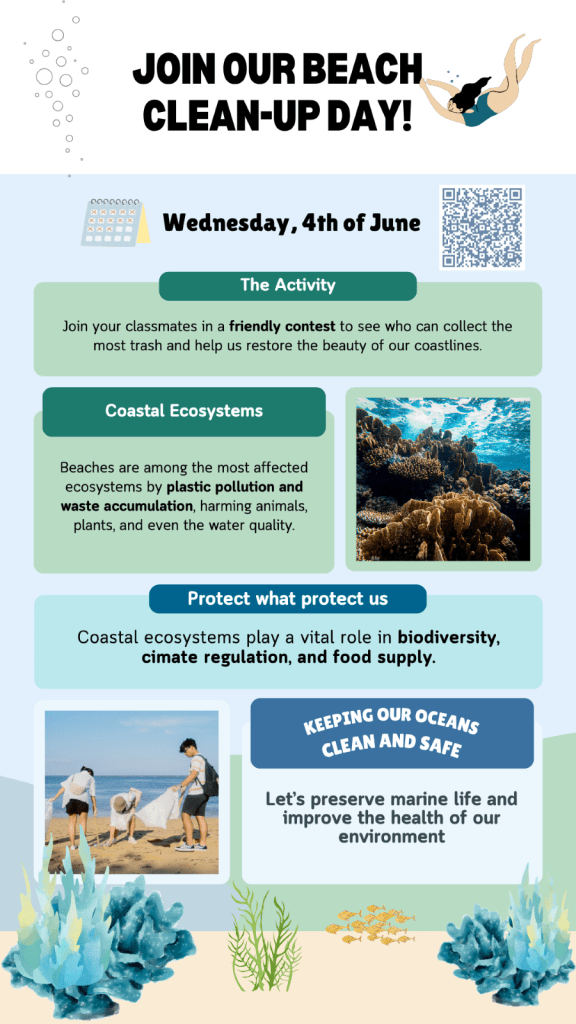
During the weekend of May 24/25, I prepared the information I wanted to release publicly, including a digital poster and a Google Form for sign-ups. Due to a particularly busy period at the school, the official launch was delayed and happened on May 27th
On that day, I sent a formal announcement to the school’s management with the poster attached. At the same time, I published the invitation to all 540 students via SkolePlan, including the poster and the sign-up form. The deadline for registration was also clearly stated. Additionally, I contacted the marketing team to ask if someone could attend the event to document the activity.
5.3 Logistics and Final Preparations
On June 2nd, after reviewing the responses to the sign-up form, Heine and I had an informal meeting to finalize details. A total of 10 students confirmed their interest, most of them from the Environmental Management group. Given the small number, we decided to carry out the clean-up at the local beach, starting from Rønbjerg Havn and covering nearby coastal areas toward Trend and Næsby.
Transportation was arranged using one of the school cars, which I booked, and Heine’s personal vehicle. Heine also volunteered to handle snacks and prepare small prizes for the competition winners.
Finally, on June 3rd, a final email was sent to the registered students, and to Theresa from the marketing team, with relevant logistic details about the event like the meeting point, what to bring and the format of the competition.
5.4 Execution of the Event
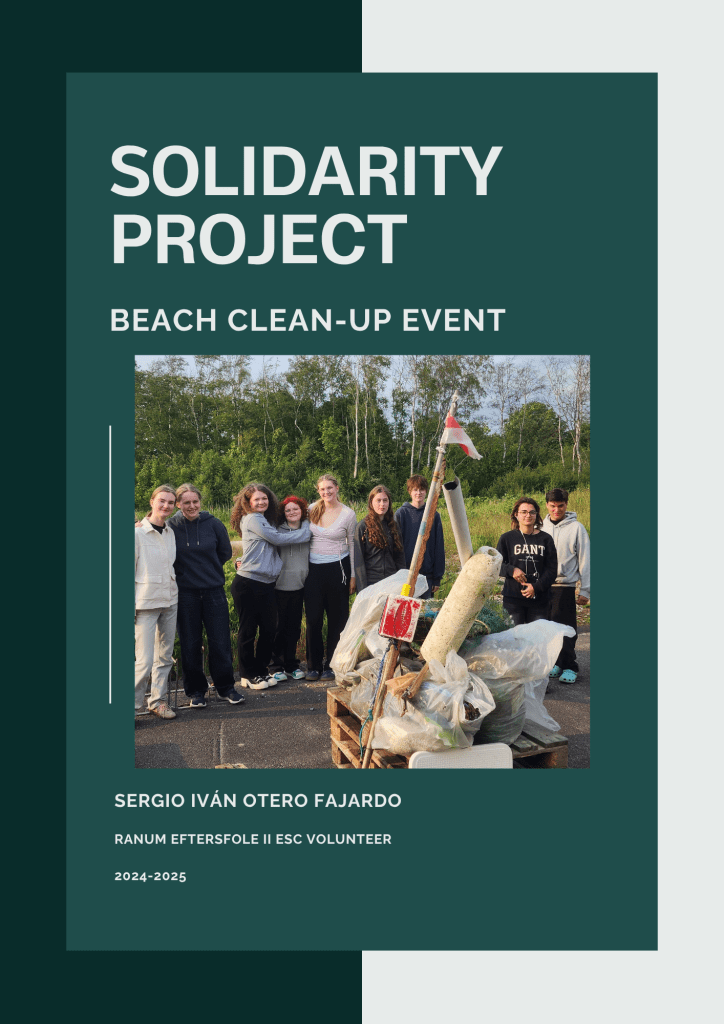
The event took place on Wednesday, June 4th, from 16:00 to 18:00. We met at the school’s parking lot at 15:50 and departed shortly after. Upon arrival at the beach, I explained the rules of the activity, including the competition categories.
Students organized themselves into small teams and chose their route, collecting trash along the two selected directions. The weather was cloudy but cooperative, and the students remained engaged and enthusiastic throughout the day.
5.5 Results and Follow-Up
After two hours of collection, we returned to the school for dinner. Meanwhile, Heine and I reviewed the items gathered and determined the winners of the competition in the following categories:
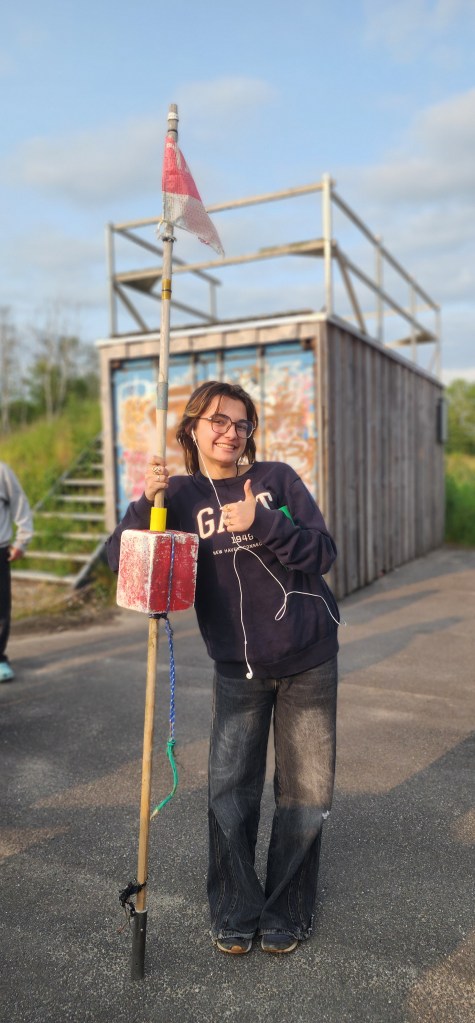
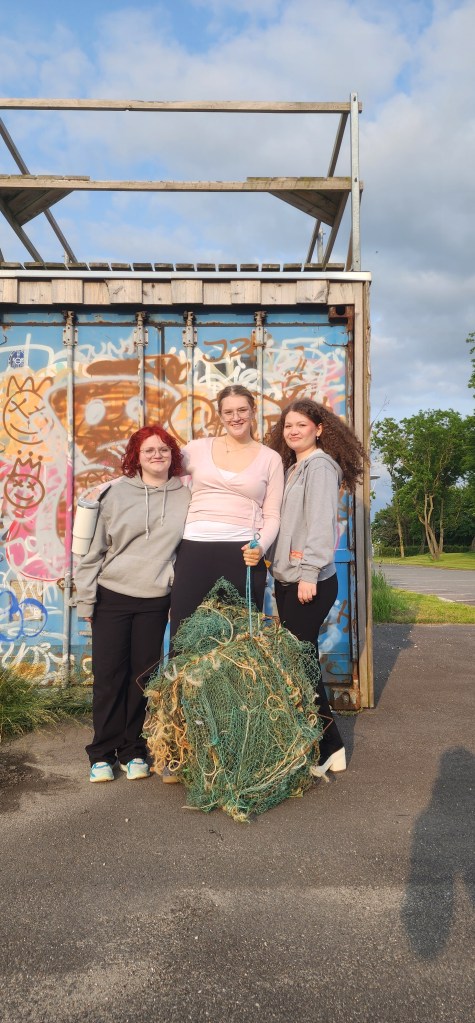
- Most Colorful Item: originally intended for the most colourful trash bag, this award was given to a student who found an object that we considered a fisherman’s flag.
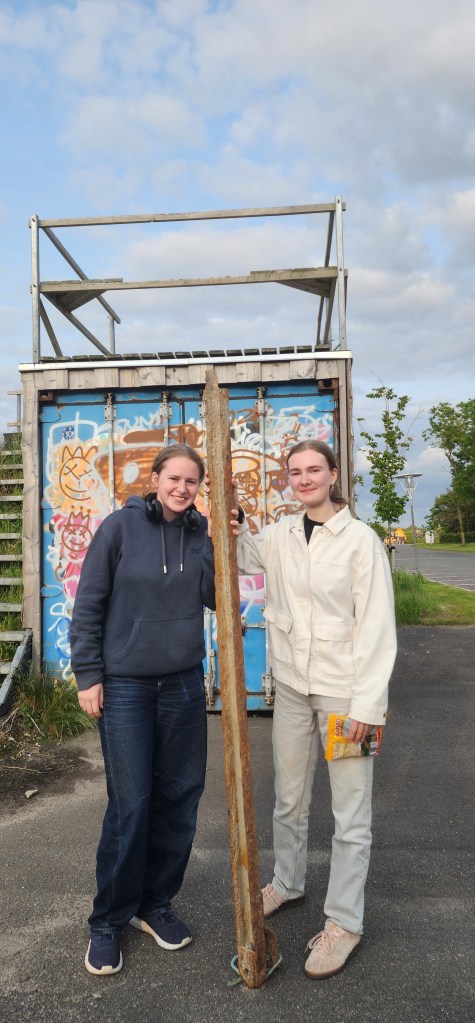
- Weirdest Item: this category had many contenders, but in the end, the prize went to two students who carried back a heavy metal price.
- Most Trash Collected: the biggest award was given to a team that gathered three full bags plus a large fishing net. This team was supposed to receive a handmade metal trophy designed and forged by Heine out of trash, but the trophy was not completed in time. Instead, participants were rewarded with candy and ice cream as a gesture of appreciation.
To conclude the activity and reinforce the environmental message, we used the school’s waste sorting containers to categorize and dispose of all collected items appropriately.

6. Challenges and Solutions
Organizing the Beach Cleaning Day came with its share of challenges, many of which are closely tied to the school’s dynamic environment, limited timeframe, and the nature of the initiative. However, by staying adaptable, it was possible to carry out the activity successfully. Below are the main difficulties encountered and how they were addressed:
6.1 Limited Planning Time
Although the idea for the event was discussed early on, its execution ended up happening within a short timeframe. Ideally, I would have preferred more time to promote the event, as an earlier announcement might have increased student participation. Fortunately, the simplicity of the activity made it feasible to plan and carry put with limited time, especially with Heine’s support on logistics.
6.2 Scheduling with a Busy School Calendar
Ranum Efterskole is a highly active environment, with numerous simultaneous academic and extracurricular activities. June was the most viable month for the event due to the conclusion of exams and increased schedule flexibility for students. However, this also meant it overlapped with “activity month”, limiting the availability of both staff and students. Additionally, I had personal travel plans that further narrowed the scheduling window. Ultimately, setting the event on June 4th proved to be a good decision, despite the tight margins.
6.3 Resource Availability
Given the busy schedule in June, many school resources such as vehicles were already reserved. The late collection of participant data made it impossible to book a school bus on time. Fortunately, because the number of participants was low (10 students), we chose the local beach as our location. This allowed us to manage transportation using just two cars. Similarly, the time slot (16:00 – 18:00) was selected because earlier hours were already occupied with other school activities.
6.4 Communication Channels and Students Engagement.
Despite using multiple communication tools (Skoleplan, posters, Google Forms), engaging a large number of students proved difficult. While initial expectations were optimistic (possibly up to 100 participants), student response was limited. Ultimately, we focused on reaching out directly to students from the Environmental Management group and prioritized official channels like Skoleplan. This helped ensure that the message reached the most interested and relevant students, even if on a smaller scale.
6.5 Organizational Independence and Internal Support.
Ranum is a very large institution, with many activities happening simultaneously. In thos context, it’s common for smaller-scale initiatives to receive limited attention. Initially, I wanted to involve the school management in the project. However, I chose to limit my communication to an informative message, sharing all relevant details as a part of the formal process. Still, I would have appreciated a response, a show of interest, or even just having the event included in the official calendar.
6.6 Overlapping Activities and Transportation Logistics
On the day of the event, sailing activity was also taking place in Rønbjerg. It ended up being something positive, since we could agree with the teacher in charge of the sailing group to swap vehicles, allowing me to use the larger minibus, while they used a smaller car. The only condition was that I assisted with returning their students after the activity, which was easily arranged.
6.7 Minor Timing Setbacks
While not significant, we did experience a small delay in departure, and a few organizational oversights at the beginning of the activity. For example, we forgot to clearly define the return points and time, which resulted in two students walking far north and needing to be picked up. Additionally, Heine was on duty that evening, which meant he had to split his attention between the event and general school responsibilities. Nevertheless, the group was able to carry out the full two hours of cleaning as planned.
6.8 Prizes and Awards
Students received snacks and candy during the award announcement immediately following the clean-up. A handcrafted trophy made of trash was originally planned as the main prize, but it was not completed in time for the event. Given the small number of participants, and Ranum’s busy schedule, we opted not to reschedule a formal ceremony.
6.9 Trash Sorting Difficulties
While we made efforts to sort and categorize the collected waste using the school’s recycling containers, not all items could be clearly identified or separated. We managed to handle and sort the larger and more obvious items. The remaining trash, being mostly flammable and difficult to classify, was disposed of in the appropriate burning container.
7. Results and Impact
7.1 Participation and Engagement
Ranum Efterskole is a large institution with approximately 540 students. As mentioned on previous sections, to invite participation in the clean-up event, a form was shared via SkolePlan along with a poster and brief explanation of the activity. In total 10 students responded to the form, expressing interest in joining (1,9% of the student body).

The day of the event, 10 students participated: 6 signed up through the form, and 4 additional students who joined after hearing about the initiative from their friends and while the turnout was limited, the ones who came demonstrated high motivation and strong participation during the activity.

7.2 Clean-Up Area and Mapping
To illustrate the covered area during the activity, the following map was created using QGIS software, including key start/end points.

With the teams splited in two groups, the students covered the following routes during the beach clean-up:
- Track North: Rønbjerg → Næsby, 2,24 km.
- Track South: Rønbjerg → Trend, 1,17 km.
7.3 Waste Collected
In total, the students collected:
- 6 full trash bags (each with a 70L capacity)
- Several larger individual items that were carried separately to the school
Although precise weighing or categorization wasn’t possible, here it’s a table with the types of waste that were identified:
| Category | Examples | Notes |  |
| Plastic Waste | Wrappers containers, plastic bags. | Most frequent category. | |
| Fishing Gear | Buoys, net fragments, two full fishing nets. | Often tangled or embedded un beach soil. | |
| Metal Debris | Rusted boat parts, a heavy metal beam. | One of the awarded items due to its weight. | |
| Textiles | Car carpet remnants, rags. | Founded near parking and harbour areas. | |
| Cigarette Waste | Butts, packaging | – |
Finally, after announcing the winners, the trash was distributed among the school’s waste sorting containers. Most obvious recyclables were sorted, and the remining flammable waste was deposited into the appropriate burning container.
7.4 Visibility and Promotion
The event was filmed by Theresa from the school’s marketing team, who later edited and shared a highlight video via Ranum’s official Instagram account, and through Instagram and Facebook Stories. The video showcased key moments of the clean-up, including student participation and a small interview about the initiative. Although the story itself was temporary, the video was also posted to the school’s feed, where it reached 8,905 views and received 112 likes. (Find the video here: https://www.instagram.com/reel/DKjM7QTPJlZ/?igsh=MW44aWc2MDY2YTA0Yg==)
7.5 Reflections on Impact
Despite the modest scale, the project made a meaningful impact on several levels:
- Environmental impact: visible removal of waste from a section of the local coastline contributed directly to healthier marine and shore ecosystems.
- Educational impact: students actively learned about coastal pollution and the value of taking initiative though direct experience.
- Community Engagement: the initiative showed how a small group can make a tangible difference through teamwork, creativity and shared purpose.
8. Sustainability and Follow-Up
Discussions with Heine confirmed the intention to repeat the initiative on a yearly basis, with the goal of integrating it more formally into Ranum Efterskole’s program. The long-term vision is to establish the clean-up as a recurring environmental action, strengthening the school’s commitment to sustainability and community engagement.
Regarding the Trash Tophy, the original idea was for it to become a symbolic and evolving prize, growing or being modified each year to reflect the legacy of previous “Kings or Queens of the Trash.” While the trophy was not ready this time, the concept remains strong and could be implemented in future editions to encourage friendly competition and highlight student contributions to environmental action.
Aside, to ensure the project’s growth and continuity, several improvements have been identified:
- Earlier planning and communication to increase students’ participation and secure internal support
- Pre-booking transportation and preparing forms and materials with more anticipation.
- Coordinating and defining snacks and logistics earlier, allowing for smoother implementation.
Beyond internal improvements, there is also a great potential for external collaboration. One promising opportunity is partnering with the “Hav Miljø Vogter” initiative. This national Danish program offers free supplies such as Seafall bags, Seafall snacks, and Marine Environment Guardian cards to encourage individual and group clean-ups. On their page, it says that they also provide event boxes for organizing larger, more social events.
Moreover, their interactive national map shows nearby collection points, including a DILID Port in Malle and four other dop-off spots in Løgstør, all within reach from Ranum. Connecting with this network could greatly expand the impact and visibility of future editions, potentially turning the event into a community-wide initiative.
Overall, this year’s clean-up served as a pilot project, and with minor adjustments and stronger partnerships, it holds strong potential to become a meaningful, lasting tradition at the school.
9. Personal Reflection
Leading this project gave me the chance to apply my skills in event planning and to carry out my own initiative from start to finish. It was meaningful to work on something that aligns with both my professional background and my environmental values.
Troughout the process, I was reminded that strong connections and collaboration are key to creating synergies and bringing ideas to life. I really appreciated the support received, especially from Heine. It was essential to making the event happen.
While the number of participants wasn’t large, the motivation, energy, and commitment of those who joined truly made the difference. That quality of engagement mattered more than quantity.
Overall, I feel satisfied and proud of what we achieved. This experience strengthened my sense of initiative, teamwork, and environmental responsibility, both as a volunteer and as a citizen.
 ESC Solidarity Projects