Solidarity Project
By Pierre Priour & Marina Palau Navas
Where were we ?
Marina and I volunteered in a Danish Youth Højskole, a school without homework or exams, where 90 teenagers aged from 16 to 19 learn to live together and discover themselves. The Danish folkschools are very ‘free’ institutions where you can learn almost anything – that is why we often say that we teach ‘life’ here. However these schools still follow a minimum guideline : to enlighten the people, the individual, and to teach democracy.
The Idea.
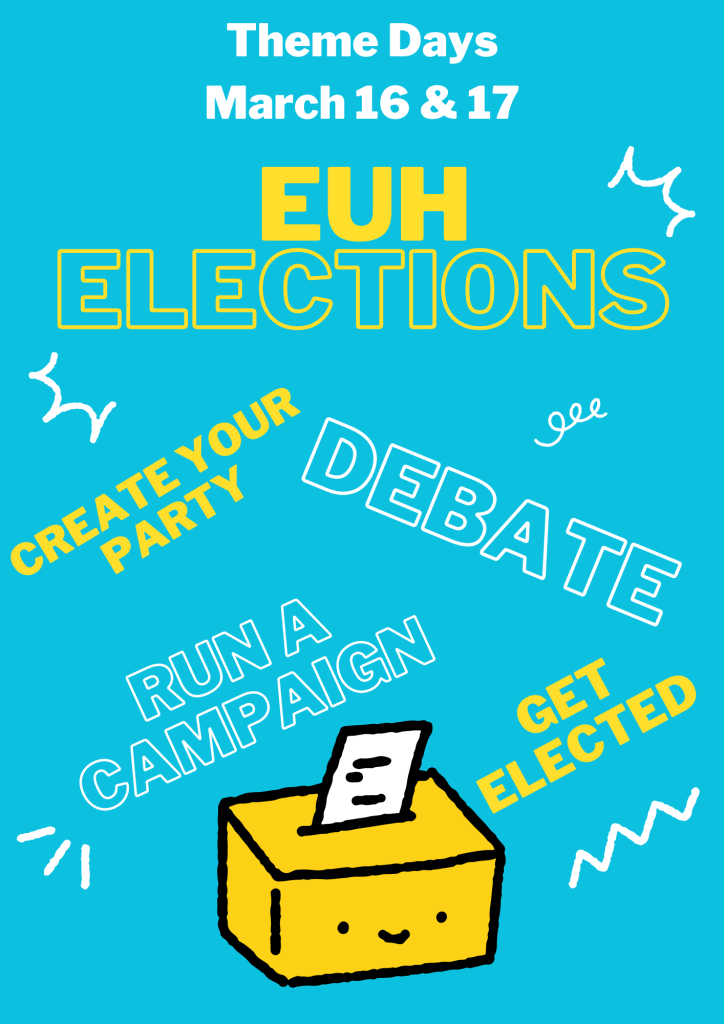
We decided to implement our Solidarity Project within this framework by organizing democratic elections within the school. The idea was simple : to bring awareness to young people that the democratic process gives them a power of action within their communities. In a nutshell, we wanted them to gather into small ‘parties’ and advocate for issues they thought should be adressed at the school – the elected students could then present their program to the teachers, and even to the school’s board commity.
The Program.
We only had a short time – two days. Here’s how we did it :
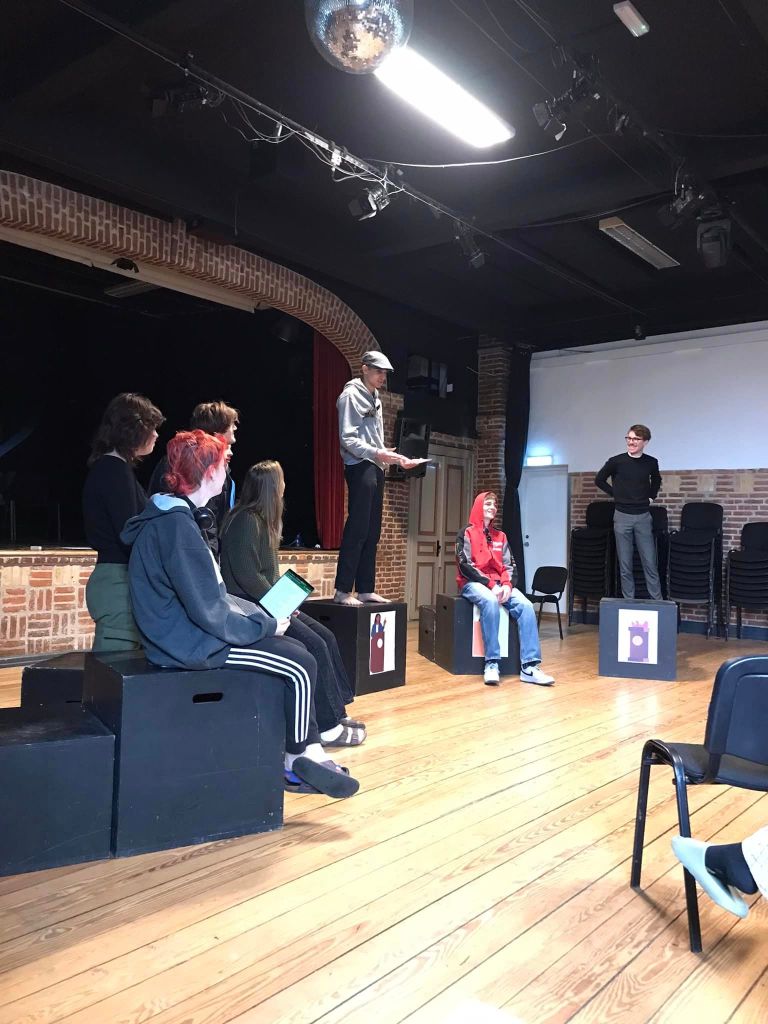
On the first morning we let the students express individually their opinions on what could be done better at the school. Each had a post-it on which they wrote their ideas, for instance « fix the bikes », « reduce plastic waste », « give students more speaking time in assemblies »… Then they grouped up according to their mutual interests. Four parties were formed. The students who were not in said parties would either assist Marina and I in the ‘administration’ side of the elections (poll clerks, registration, setting up the schools premises) and/or attend discussions forums.
On the afternoon, the party members created their programs, visual identities, communication documents, wrote a speech – but most importantly walked around the school to advocate for their cause to the other students.
The second day was also divided into two parts.
In the morning, we set up the biggest room of the school to host a debate. The parties first argued for their causes, and then answered questions from the other students. What first started as a political competition ended into a big democratic forum – the students realizing that they wanted more or less the same things, they simply sat down and talked their way into how to act in unity to make an active change. It was a beautiful moment of cooperation and understanding
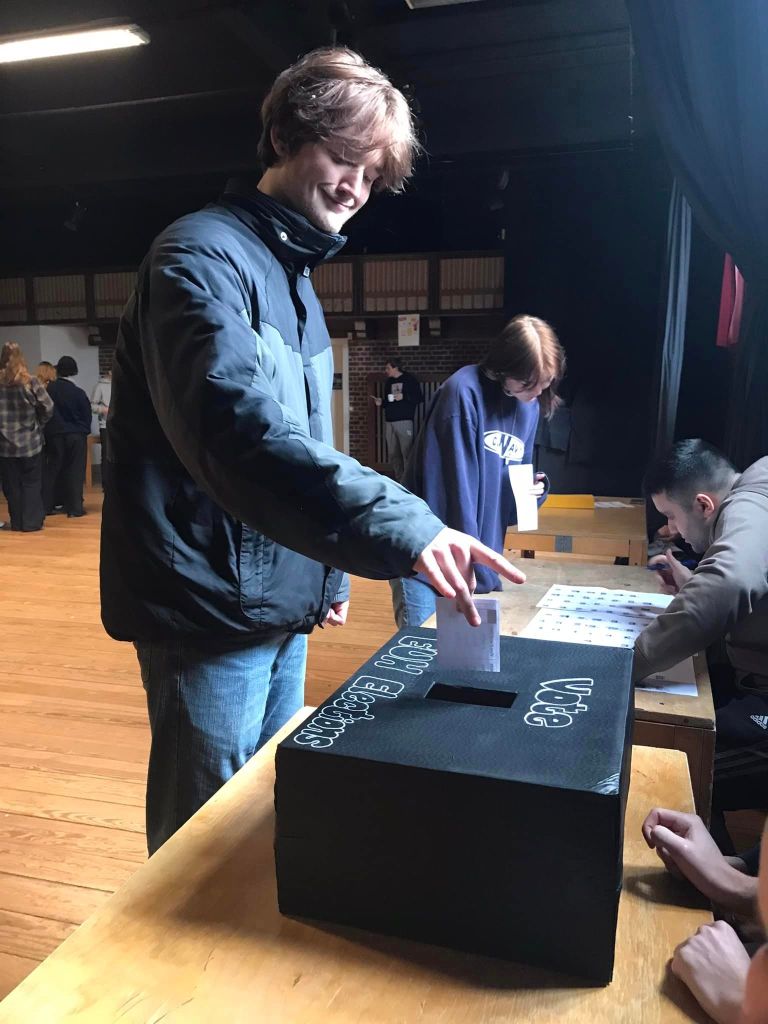
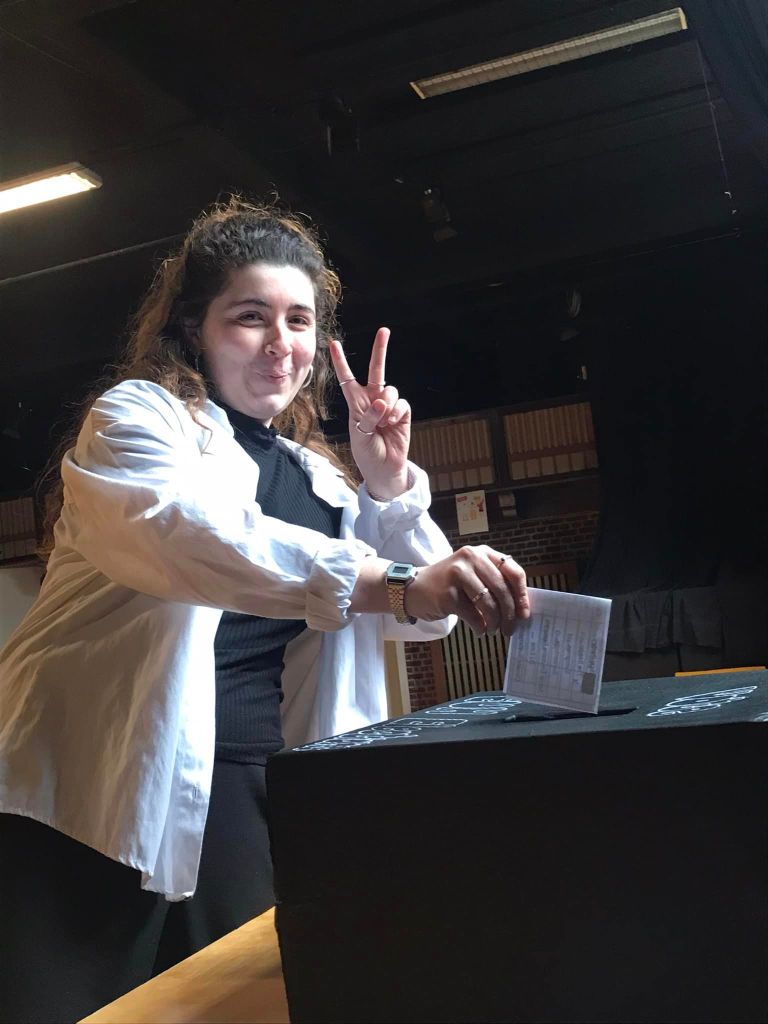
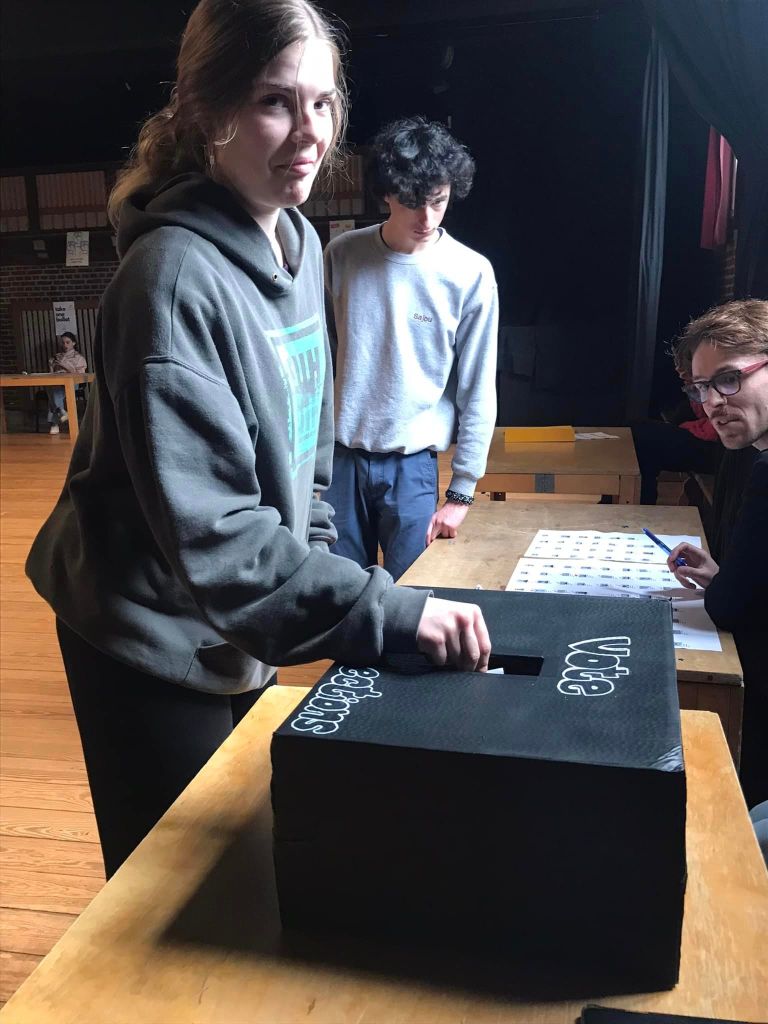
The afternoon, the students voted, one by one, ballot in hand, as they will have to do when they turn 18. Julie, 17 years old, was elected with her party. They advocated for women’s right and ecology. Their program was submitted to the board : free access to pads and tampons, reusable aprons in the kitchen (implemented on the very next week!), and more discussions about our impact on the environment.
To conclude.
This project was a great learning experience. Acting for solidarity can be done at any strata of society, and with very different social groups. Our was teenagers ; people bursting with ideas and a will to change, but also frustrated by their range of action that they perceive as narrow. Seeing them overcome their differences with maturity to work together for a more just environment was really inspiring. They are our future, and we hope to have inspired them to make it brighter.
 ESC Solidarity Projects