AFS/ESC – Solidarity Project at Ranum Efterskole College (REC)
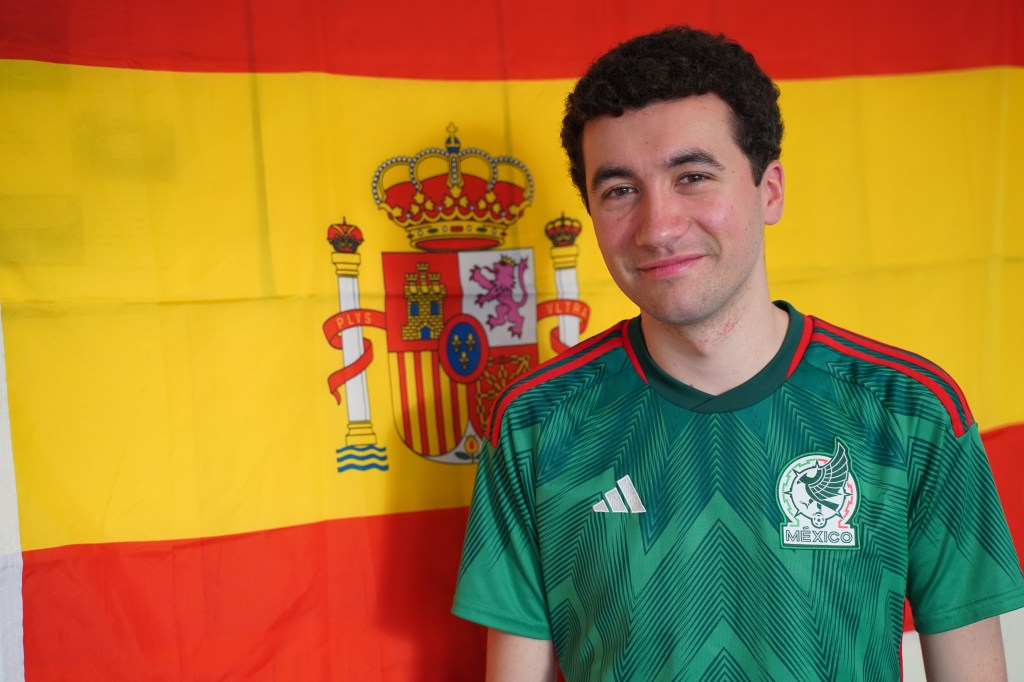
José Luis Conesa Zamora (Spain) – School Year 2024/2025
TABLE OF CONTENTS
- Introduction
- International Spanish Language day
- Making process
- The event
- Personal reflection
- Photo gallery
INTRODUCTION
The European Corps of Solidarity (ESC) is the framework programme in which I undertook a voluntary stay in a foreign country during the academic year 2024/2025. In my particular case, I have been working as an assistant teacher at an international boarding school in North Denmark called Ranum Efterskole College (REC).
Throughout the school year, my colleagues and myself have been involved in many different kind of activities, trips, cultural exchanges and social events, both organised by REC or hosting AFS students worldwide. Is this one of the main reasons why I have decided to focus my AFS/ESC project on an event particularly close to my heart, which is the sharing of Spanish language and culture.
The aim of this report is to analize the event, explain the steps to make it happen, as well as put into paper the personal reflections as a result of the effort and work put on it.
INTERNATIONAL SPANISH LANGUAGE DAY
The International Spanish language day is an annual celebration of one of the six languages of the United Nations (UN), which is marked every year on April 23. This celebration has the objective of promoting and appreciating multi-linguism and the significance of Spanish culture in the rest of the world, especially in the American continent. This day is formally known as the U.N. Spanish Language Day.
The Spanish language is part of the Indo-European languages and it was originated from Latin. Understanding the formation of this language is quite simple; consider Romance as the root language from which western and eastern Romance languages emerge. From Western Romance, derive Iberian which will further split into three different languages; Castilian, Portuguese, and Spanish.
Spanish language in its infancy is described as a mixture of crude Latin and local languages with three different stages of development. The first stage is considered during the fall of the Western Roman Empire in the 5th century and the emergence of individual kingdoms in Iberia.
The second stage was during and after the Moorish conquest of Iberia in which Arab-Berber invaders from North Africa ruled the region in the 9thcentury. During this time, Arabic had a great influence on not only the language but also on the Iberian culture. All during this time, the language continued to evolve but still did not gain the status of being acknowledged as an actual Spanish language.
The third stage of the language’s evolution was when the Kingdom of Castile was established in the 13th century. The overthrowing of the Berbers in the land saw the local Iberians starting to restore the post-Latin roots of the language, hence giving it a proper new script and dialect which ultimately evolved into Spanish.
The Spanish conquests in the Americas and the following emergence of the Spanish Empire was the determining factor behind Spanish gaining an international language status. After the formation of the United Nations, Spanish was among the six languages chosen to be the official languages.
It is nowadays celebrated on the 23rd of April in honour of Miguel de Cervantes, who died on the same day in 1616.
With all the information aforementioned, it is needles to say the importance of celebrating this language as a cultural remain that has survived and evolved over the centuries until this day and age. Knowing this thanks to the International department of Ranum Efterskole College, it came as a group idea to organise an event to provide information, teach, make enjoy and, in the end, share experiences with students as part of the multicultural programme developed by one of the UNESCO Associated schools.
MAKING PROCESS
A previous meeting was organised some weks before the event along with some of the teachers, in order to coordinste, brainstorm and suggest new ideas for the event, which was celebrated in Room U104 on the 23 of April 2025 at Ranum Efterskole College. From this meeting I came to the conclusion that it had to be a one-day duration event, from the morning to the evening, trying to involve as many members of the community as possible. In order to do this, I decided to contact the kitchen staff so some Spanish food would be prepared as one of the daily meals of the day (Spanish omelette for lunch, with the coincidence of having chili con carne for dinner the previous evening). As mentioned before, the husfee of the different house where the students sleep were also part of the project. I sent them out an email with a music playlist of Spanish songs, so they could use it as the daily wake-up call for the day.
The announcement of the event was posted twice on the Instagram account of the school, as well as on the Facebook group with more than one thousand members. Furthermore, many posters were holded in the hallways and corridors of the main building and the rest of the accomodation houses belonged to the school.
The room was booked via Skoleplan some days before the event. I borrowed some flags from the school, such the Spanish, Mexican, Argentinian or Dominican. Also, I decorated the room with typical Mexican flags, posters with maps of the Spanish-speaking countries and some tongue twisters in Spanish.
The Administration department was involved for the budget, as I spent some money to buy and get the prizes that I was going to give to the winners of the games and activitities.
For the decoration of the classroom where the event was going to take place I just needed two hours of preparation. After all, some teachers on duty that evening assited me in the realization of the games, organisation and management.
THE EVENT
First of all, it is worth bearing in mind that the event was not as well-visited as expected because of another big and compulsory event that also took place at the same time at the school.
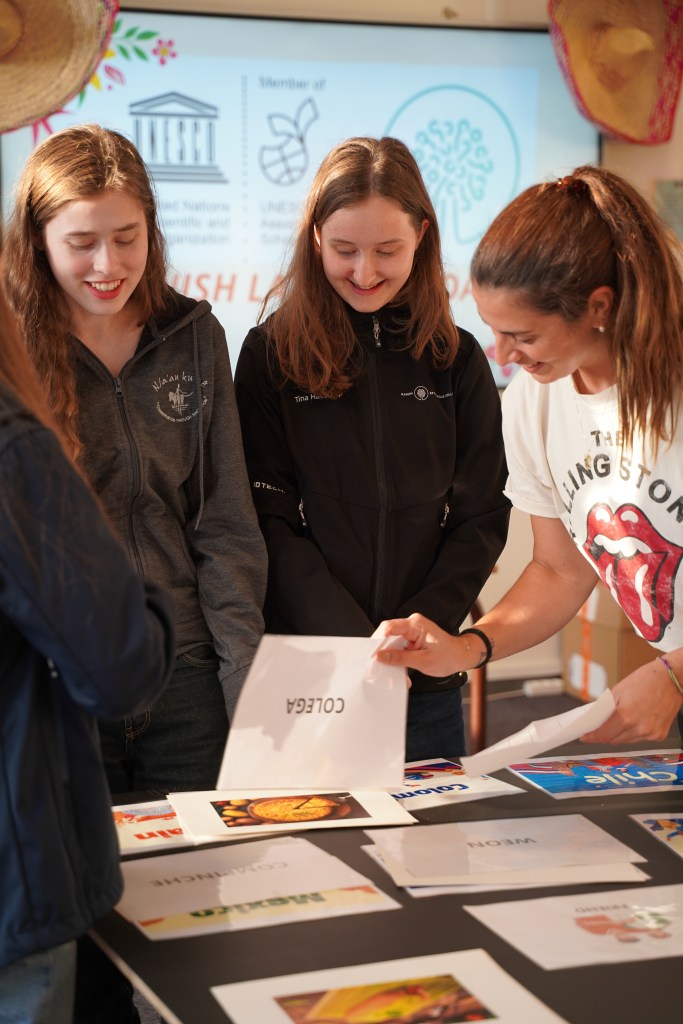
Notwithstanding, the activity was presented to a small group of students who showed up and actively participated. The idea was to prepare four games with prizes. These games’ names are the following:
- “Guess the flag and the country on the map”
- “What does this accent come from?
- “Relate the country to the word”
- “Try to say the tongue twisters”
Online resources used:
30 trabalenguas en español para practicar pronunciación
PERSONAL REFLECTION
The aim of this project was mainly to introduce my native language and my own culture profiting of the fact that the Spanish language day actually exists. By doing this, I have the feeling that I contributed in generating an international environment and atmosphere among the students.
That is, indeed, one of my roles at Ranum Efferskole College as a volunteer. Thus, creating a dynamic, international, innovative and more social experience for the students who attend classes at this boarding school.
Moreover, I can say that organising this event has helped me a lot in terms of learning how to manage with events involving people, teenagers, other colleagues, budget, decoration and innovative ways of teaching by creating new games or using the technologies available.
As I would like to become a teacher in the future at some point, so in essence I find quite interesting the realization of this type of activities, even more in a special kind school like the Danish boarding school.
In light of the above, I personally believe that a multilingual and a cultural awareness competences have flourished while organising this Spanish evening, represented more specifically in the fact of having to deal with English/Danish speakers and teaching them some Spanish cultural facts, language and traditions.
PHOTO GALLERY


 ESC Solidarity Projects