Introducing myself and my host project
Hej, my name is Antonia, I am from Germany and for the past year I have been doing my ESC in Denmark at Kalø økologisk Landbrugsskole. Kalø is an international agriculture school, where students learn about organic farming, not only in the classroom, but also on the school´s own little farm. During my ESC the two other volunteers in my project and I helped out on the school’s farm and in the school kitchen, which partially cooks with the produce from the farm. We rotated between farm and kitchen every month so that we could each experience the different tasks during each season.
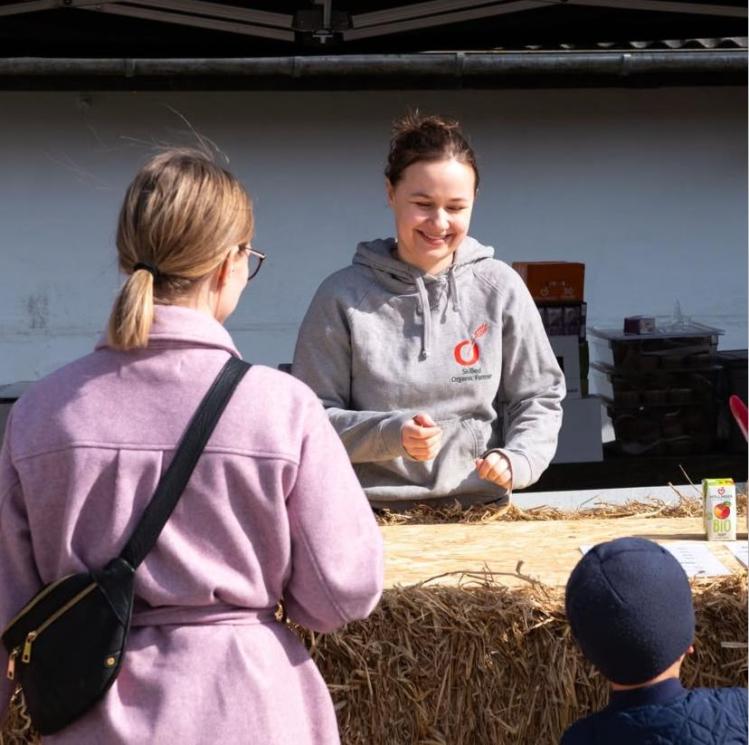

In the kitchen I helped prepare the meals for students and staff, which included baking a lot of different breads, such as sourdough or rye bread, chopping vegetables as well as washing dishes and cleaning. I learned how to make, maintain and use my own sourdough starter and how to prepare cream and yogurt from raw milk. I also helped to produce our own Kalø products for the farm shop, such as muesli, rye bread, marmalade and homemade chocolate spread called brunch mums. During events the kitchen often sold food, so I also got to help out at markets like the harvest market or the Christmas market. My favorite day in the kitchen was always Wednesday, because it is cake day at Kalø, which means I got to bake and later eat a delicious cake.
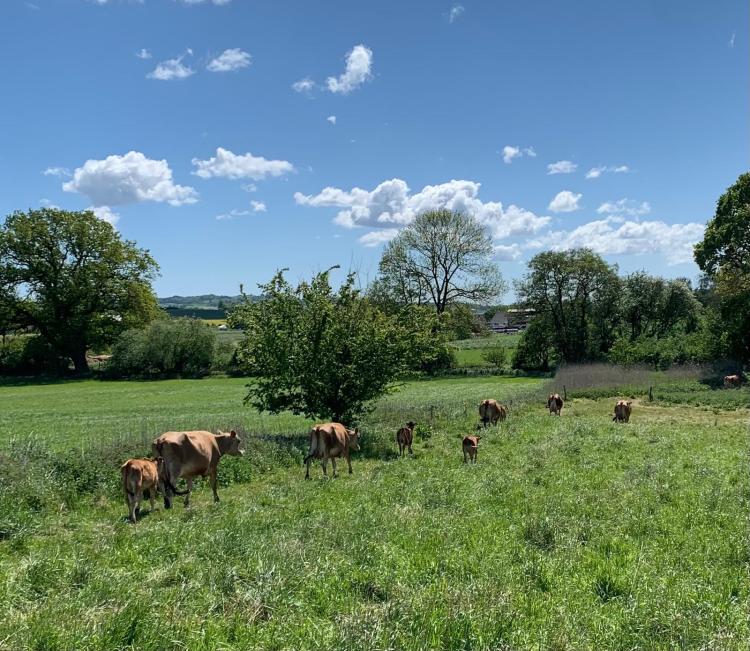
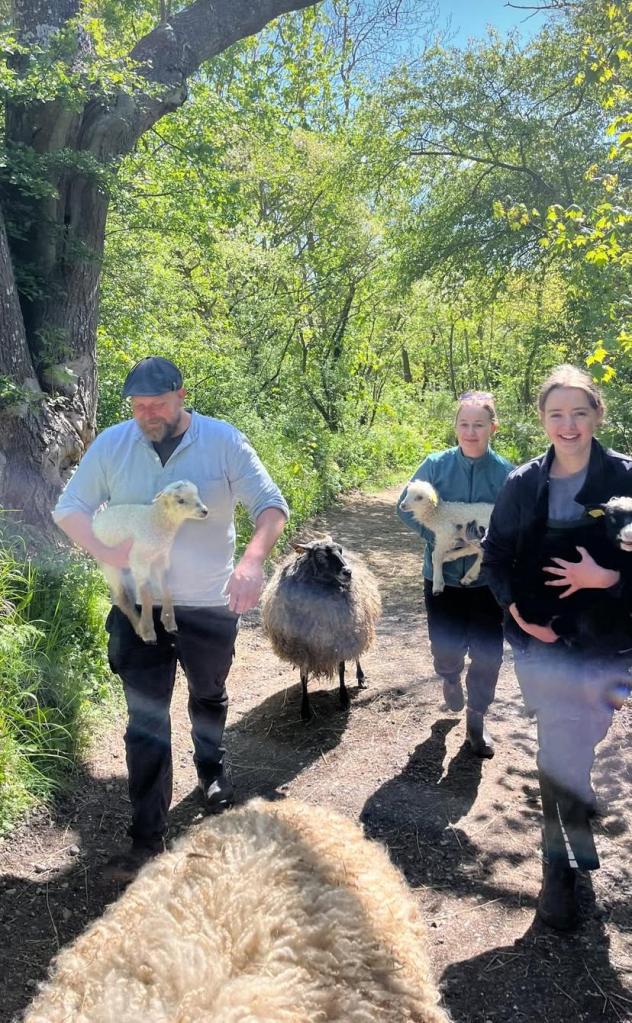
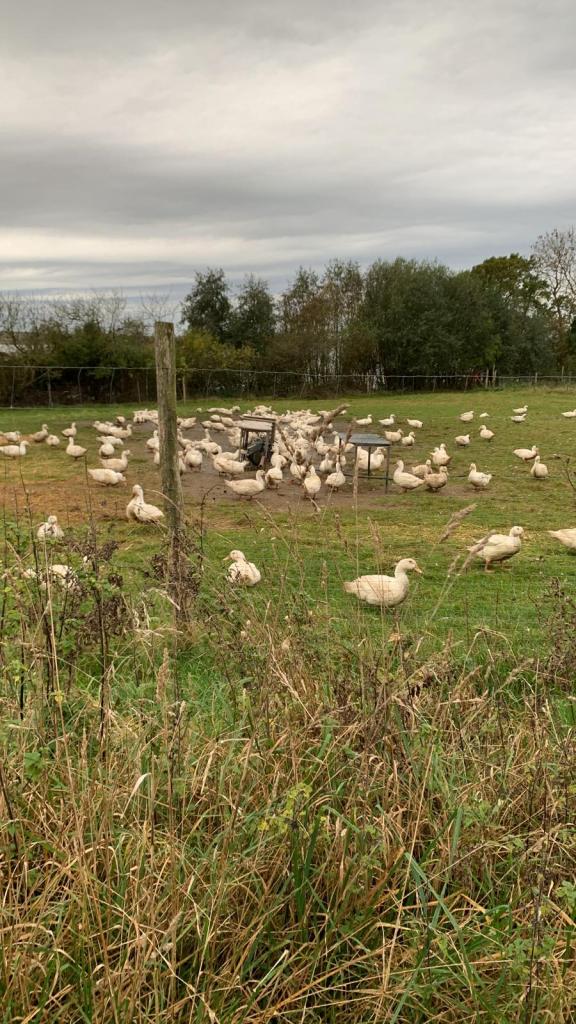
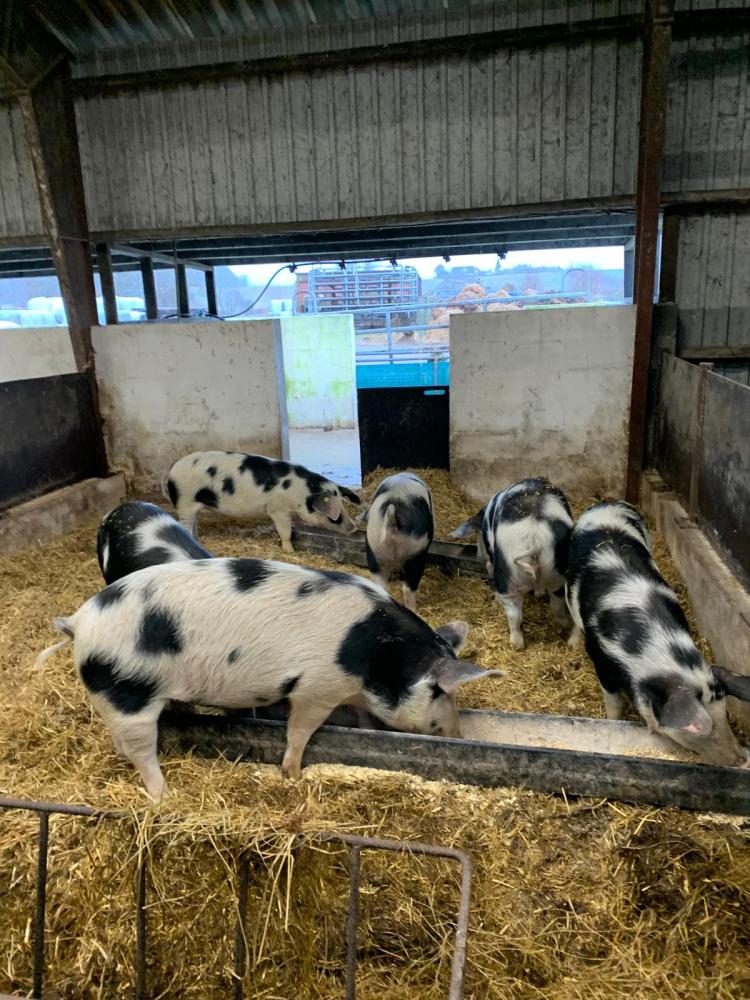


On the farm I got to work with plants and animals. The animals included cows, sheep, ducks and pigs and it was part of my daily tasks to feed them, clean their water and clear their shit away. I learned how to milk the cows, sheer the sheep and I got to put an ear tag on a lamb. One of my personal highlights was to witness the birth of a lamb and to be able to name one of the calves.
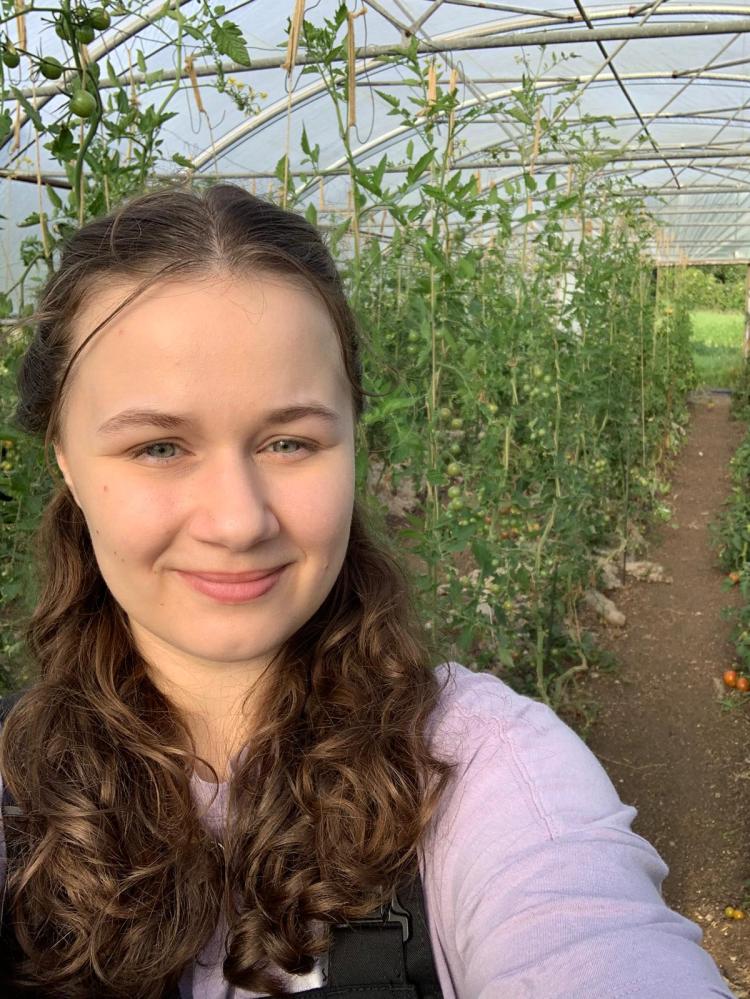


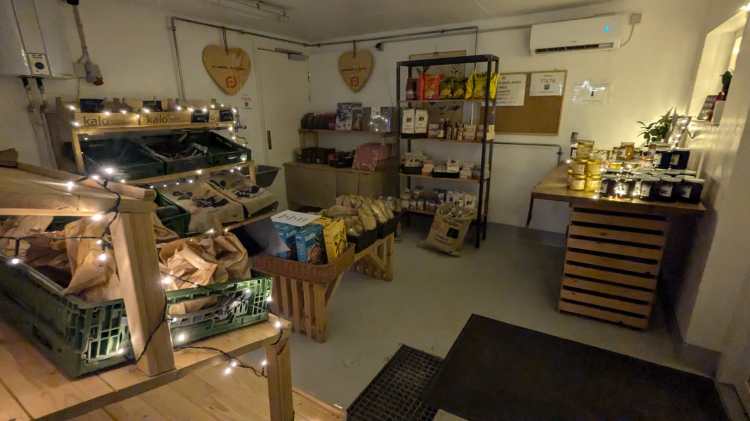
When taking care of the plants my daily tasks included watering and weeding them, seeding or planting new plants and harvesting produce for the farm shop. I also helped maintain the farm shop by cleaning it and stocking up the shelves with products and vegetables. While working on the farm I also learned how to operate machinery like our Mini loader and different tractors.
My solidarity project: a herb and tea garden
For my solidarity project I decided to work together with the two other volunteers in my project, so that we could create something a little more ambitious and meaningful.
Vision and masterplan
Like our work we also wanted our solidarity project to be a combination of farm and kitchen. On the weekends, when the canteen is closed, we share a kitchen with the students. After a while we started to notice that flowerpots with herbs kept appearing and dying because no one was looking after them. This gave us the idea of creating a tea and herb garden, where students can harvest some fresh herbs for cooking. In addition, we also wanted to make a small scale tea production for the farm shop.

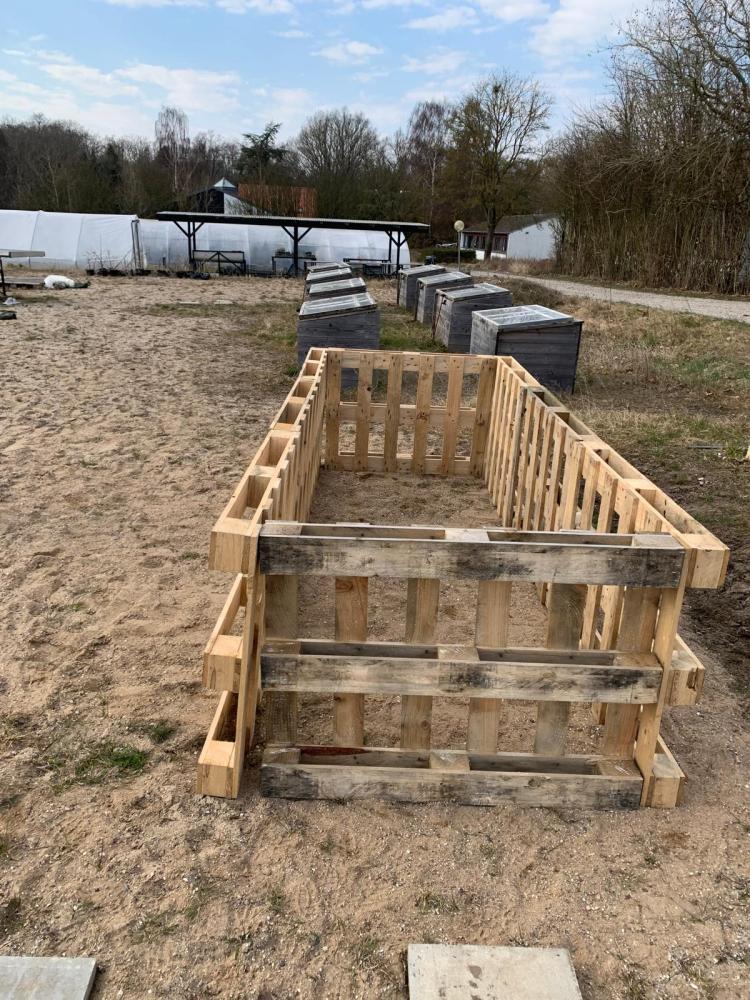
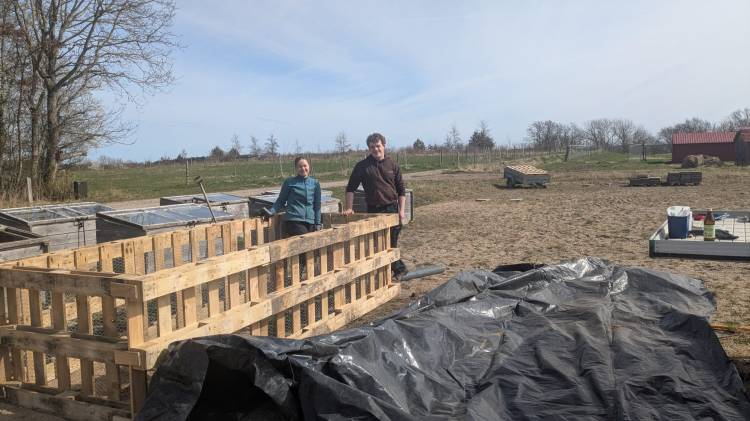
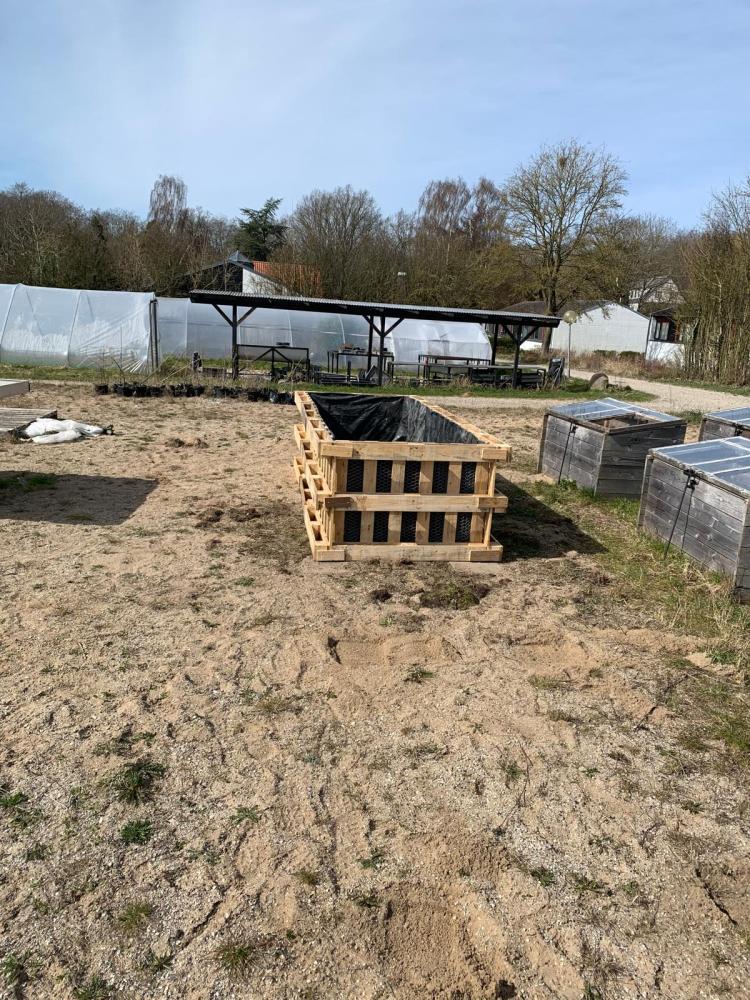
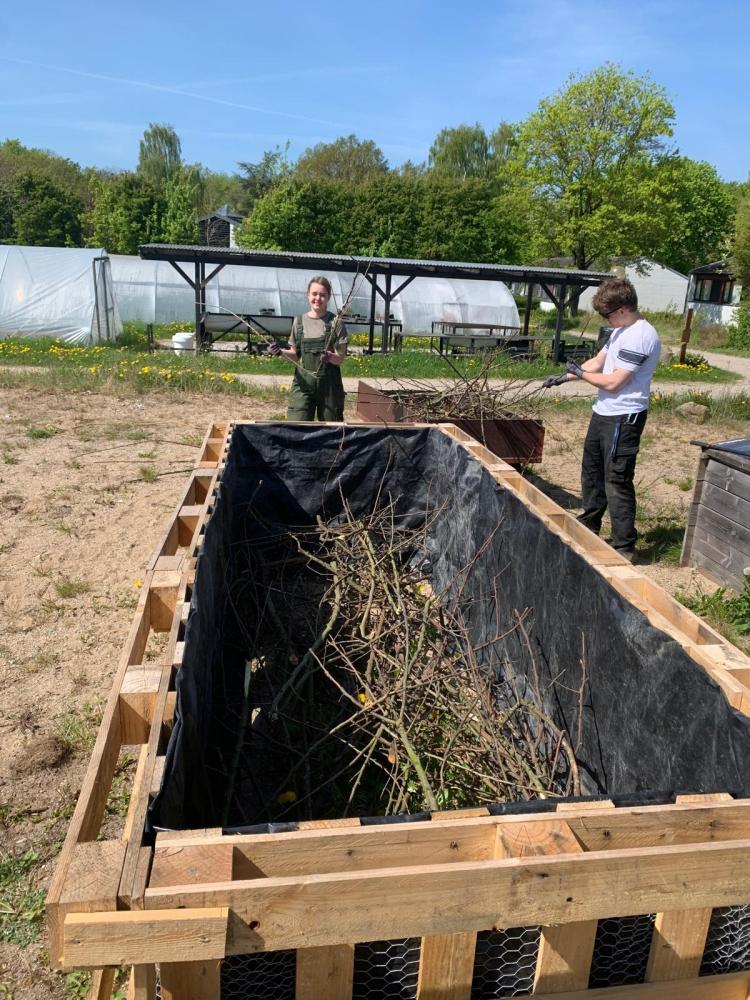
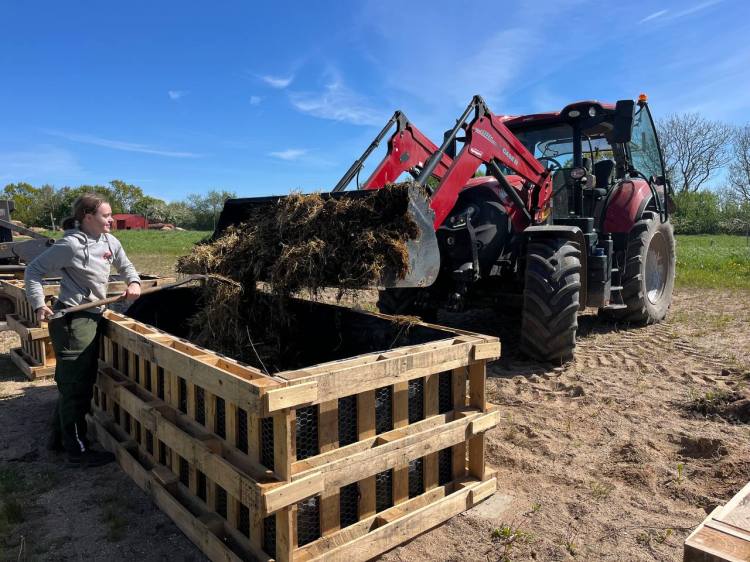

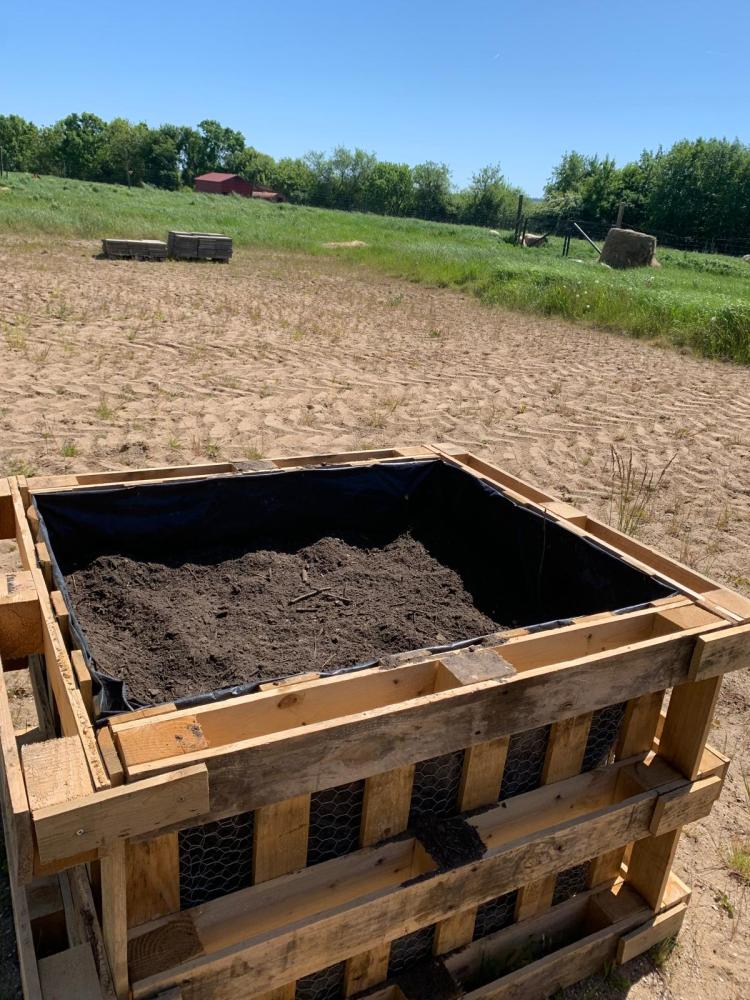
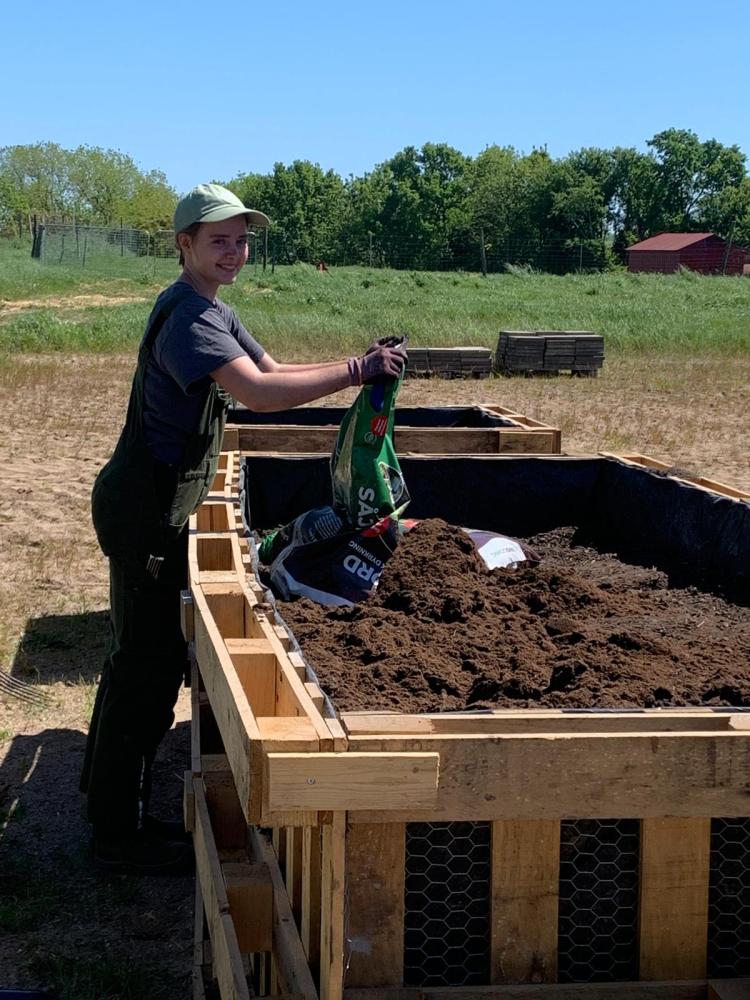

We started planning our project in March. It was important to us to build as sustainably as possible and not to buy any new materials. The raised beds are made from used disposable pallets that we were able to pick up for free at the local hardware store. We found all other materials, including the seeds, on the farm, as they had been used for projects in previous years. Since we were able to get 20 pallets from the hardware store, we based the size and number of raised beds on that amount. Fortunately, we were also able to occupy four unused raised beds, already existing on the school grounds for our project. In order to ensure a secure and level base of the beds we started to even out the ground and then embedded stone slabs for the corners. We then screwed three pallets together for the long sides of the two large beds and added one pallet on each short side to build the frame. For a little more stability and to deter rodents, we stapled rabbit wire to the inside. We then covered the inside with foil. To optimize the nutrients in the soil and the water content, we first filled the beds with a layer of branches, a layer of straw, then a thick layer of compost and finally a thin layer of potting soil.
Planting our herbs and tea plants

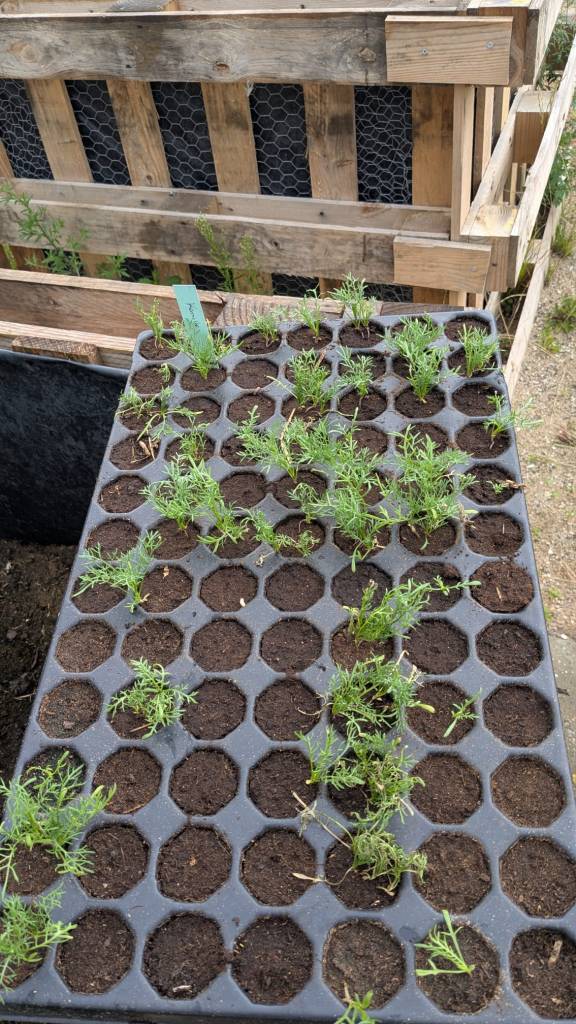


Due to the freezing temperatures in April nights, when we first started to implement our project, we had to seed our herbs and tea plants in seeding trays so that they would not die of frost damage. We selected coriander, parsley, basil, oregano, thyme and dill as our herbs as well as peppermint, sage and chamomile as our tea plants. Once the seeds had germinated, we moved them to the greenhouse, which in addition to a warm environment also provided enough light so that our little seedlings could grow. After a few weeks the plants had reached a height of two to four centimeters, and it was time to plant them in our raised beds. Over the course of the next six weeks, we took turns in watering and weeding our plants to ensure an optimal growth and plant wellbeing.
Our first harvest


Soon it was time to harvest the first herbs and tea plants. The chamomile, sage and coriander were the first ones to be ready, so we made sure to harvest them on a relatively dry day. Once the plants were harvested, we spread them out on trays lined with baking sheets and let them pre dry overnight. The next day we continued the drying process and to make sure our harvested plants would be fully dried we placed them in the oven at fifty degrees Celsius for two hours. After our plants came out of the oven, we packed them in bags in order to store them better. We placed those bags in the student kitchen so that the new students could enjoy our first batch of sage and chamomile tea and use our dried coriander as seasoning for their food. This will hopefully eliminate the abundance of dead single use herb plants that once used to line the shelves of the student kitchen.
Evaluation
Despite our eventual success, we too had some problems in the beginning. The first of them being to even find a place for our raised beds, because not all lucrative locations could be easily watered and some of them had to lie idle and therefore could not be built on. After careful consideration with our boss, we eventually agreed on a spot next to already existing raised beds, which met all our needs. Soon enough we faced another big challenge, which was that not all of the newly planted seeds germinated. One the one hand this was simply due to the age of some of the seeds, which is why in the end we could not grow parsley. On the other hand, the lights in the seeding room were not sufficient for our seedlings to grow, which is why we had to redo the entire seeding and later placed the second batch in the greenhouse, where the natural sunlight could help them grow. This set us back about three weeks in our time schedule and as a consequence we were not able to harvest all plants during our time in Kalø. We could not harvest all the chamomile, sage and basil yet, as it was not ready. As a result, we only produced tea in relatively small quantities. If our project is continued by the next volunteers, I imagine that their tea production could be greater than ours.
 ESC Solidarity Projects